If you’ve been battling mosquitoes all summer and want to avoid spraying chemicals on your skin, you’re not alone. Many homeowners have been sharing a Listerine Bug Repellent Recipe That Actually Works.
I wanted to find out if it really works, so I tested it and researched how it helps. In this guide, I will share the exact recipe, how to use it, what bugs it repels, and its limitations. By the end, you’ll know how to use that blue bottle in your cabinet.
- What Is the Listerine Bug Repellent Recipe?
- Does Listerine Actually Repel Bugs?
- What Bugs Does Listerine Repel?
- Ingredients for Listerine Bug Repellent
- Tools Needed for Making Listerine Bug Repellent
- Step-by-Step Instructions
- What Kills or Repels Mosquitoes and Bugs?
- Frequently Asked Questions About the Listerine Bug Repellent
What Is the Listerine Bug Repellent Recipe?
You can make a simple bug repellent using original blue Listerine, mixed with a few other ingredients. The main active ingredient is eucalyptol, an essential oil in Listerine that helps repel bugs. This oil gives Listerine its strong smell that insects dislike.
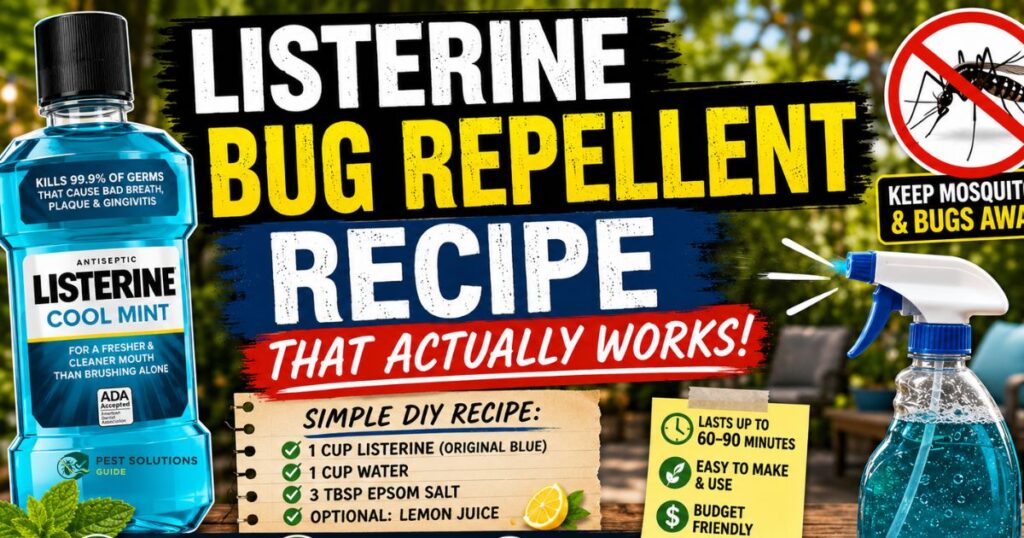
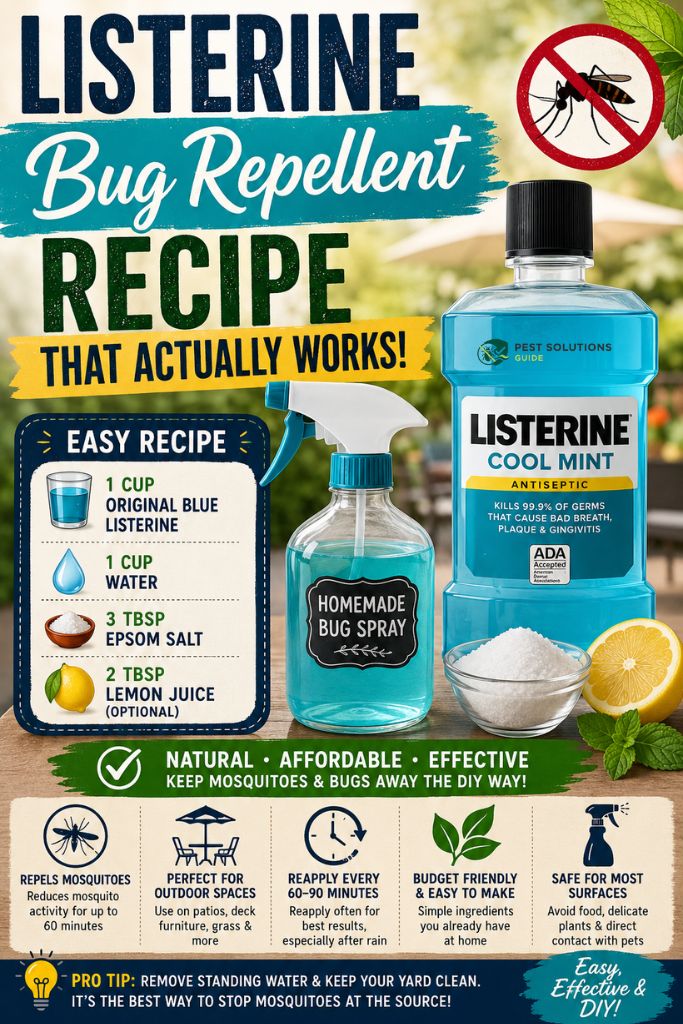
A common recipe for reducing mosquitoes involves equal parts Listerine, water, and Epsom salt. Some people also add lemon juice or white vinegar for better results. I tried the basic mix: 1 cup of Listerine, 1 cup of water, and 3 tablespoons of Epsom salt.
I sprayed it around my back patio, and it cut down mosquito activity for about an hour, but it didn’t completely solve the problem. The smell and effectiveness wore off quickly.
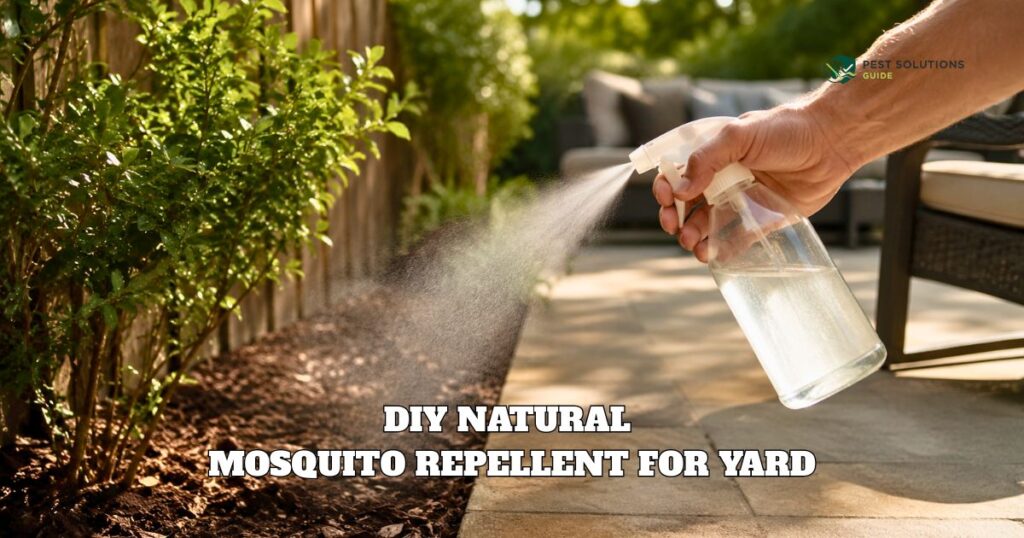
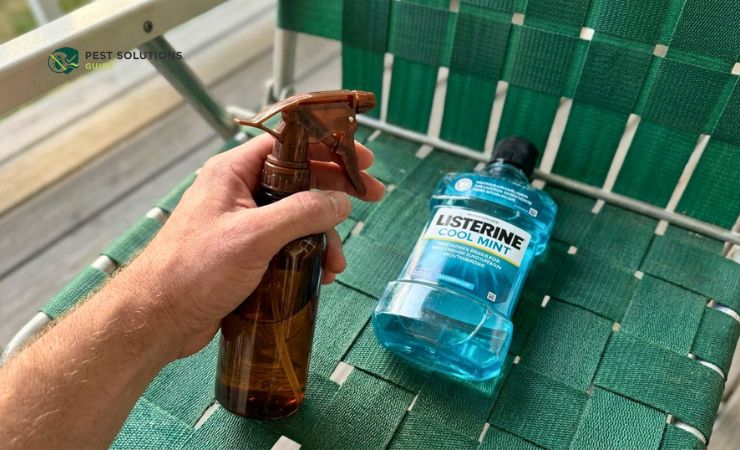
It’s essential to note that this spray works best on outdoor surfaces and in the air, not directly on your skin for long periods. Listerine contains alcohol, which can irritate sensitive skin if used too much. Use this spray on your patio, lawn chairs, and the grass around your seating area for the best results.
Does Listerine Actually Repel Bugs?
Listerine can repel some insects because it contains eucalyptol, a component of eucalyptus oil. However, it is not registered as a pesticide and should not replace DEET when camping. Its effectiveness decreases when mixed with water, as the eucalyptol gets diluted.
The alcohol in Listerine also evaporates quickly at high temperatures, so it only lasts 30 to 60 minutes. It is more effective when sprayed on outdoor areas, such as deck railings and furniture, rather than for personal use.
If you plan to be outside for a long time, especially in areas with many mosquitoes, consider using a CDC-approved repellent, such as picaridin or oil of lemon eucalyptus, along with Listerine.
What Bugs Does Listerine Repel?
The Listerine bug repellent recipe primarily targets flying and biting insects, especially mosquitoes. They dislike the strong minty smell. I also saw fewer gnats and small flies around my patio chairs after spraying. Some homeowners say it also keeps ants from crossing treated areas, but this effect doesn’t last long since the alcohol dries quickly.
This spray doesn’t work on ticks, fleas, or roaches. For those pests, you need specific treatments, and using Listerine for ticks in your yard won’t help. If you have those issues, consider using yard sprays or hiring a pest control professional.
This recipe is great for casual outdoor use, like backyard cookouts, early-morning gardening, or sitting on the porch at dusk when mosquitoes are most active. It is a low-cost and low-risk option for situations with light bug pressure.
Ingredients for Listerine Bug Repellent
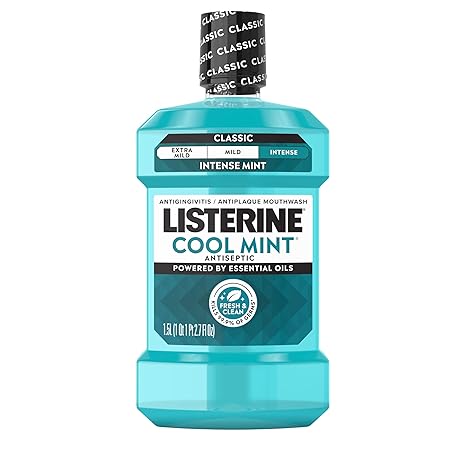
1 cup Original Blue Listerine: This is the main ingredient. It contains eucalyptol, menthol, thymol, and methyl salicylate, which help repel bugs. Avoid using whitening or cavity-fighting types, as they contain different ingredients and do not repel bugs effectively.
1 cup Water: You can use plain tap water or distilled water. Distilled water can help stabilize the spray and prevent mineral buildup in the bottle.
3 tablespoons Epsom Salt: This salt helps the solution stick to surfaces longer, which can improve its effectiveness. It dissolves easily and usually leaves no residue on outdoor surfaces.
2 tablespoons Lemon Juice (optional): Use fresh or bottled lemon juice for a scent that bugs dislike. You can also use white vinegar for acidity and as an additional scent to deter bugs.
Tools Needed for Making Listerine Bug Repellent
- 16 oz spray bottle: Ensure it is clean and has not held any chemicals before.
- Measuring cups: For accurate mixing.
- Funnel: To pour easily into the bottle without spills.
- Permanent marker: To label the bottle clearly.
Step-by-Step Instructions
Prepare Your Ingredients: Start by pouring one cup of original blue Listerine into your spray bottle using a funnel. Next, add one cup of water and three tablespoons of Epsom salt. Make sure to add all the ingredients to the same bottle before sealing it and shaking. If you add the salt before the liquids, it may clump at the bottom and not dissolve well.
Shake the Bottle Well: Close the lid tightly and shake the bottle for about 30 seconds until the Epsom salt fully dissolves. The mixture should look evenly mixed with a slightly cloudy blue-green color. If you added lemon juice, the color might change a little; that’s normal. Don’t skip this step, as an uneven mix won’t work effectively.
Spray the Areas You Want to Protect: Hold the bottle about 12 inches away from the surface and spray in a slow, sweeping motion. Target your deck, patio furniture, the edges of your grass around seating areas, and shaded spots where mosquitoes like to rest. Avoid spraying food, plants you plan to eat, or pets. The alcohol in Listerine can harm some delicate plants, so keep it on hard surfaces and grass.
Reapply Every 60 to 90 Minutes: Remember to reapply the spray regularly. It evaporates quickly, especially in hot weather. Set a timer to remind you to reapply every hour. After light rain, spray again right away since the mixture washes off easily. Having a second pre-mixed bottle nearby can help during outdoor activities.
Store Leftovers Properly: Tighten the bottle and keep it in a cool, shady place, away from direct sunlight. Sunlight can break down the active ingredients faster. The mixture remains effective for about one week before the smell fades and the eucalyptol breaks down. Label your bottle with the date you mixed it to keep track of when it might lose effectiveness.
What Kills or Repels Mosquitoes and Bugs?
DEET-Based Sprays: These are the best for personal protection. DEET confuses mosquitoes, making it harder for them to find you. Products with 20-30% DEET give several hours of protection with each use.
Picaridin: This is a good alternative to DEET. It is less greasy and does not smell strongly. Picaridin works against mosquitoes, ticks, and flies. I prefer it for everyday use because it won’t damage plastics or fabrics like DEET can.
Oil of Lemon Eucalyptus (OLE): The CDC says OLE is an effective repellent. It contains PMD, which makes it difficult for mosquitoes to find you. Remember, OLE is different from regular lemon eucalyptus essential oil.
Permethrin Yard Sprays: Use this spray for your lawn and bushes. Permethrin sticks adhere to plants and kill or repel mosquitoes, ticks, and fleas on contact. Never put it directly on your skin.
Essential Oil Sprays: These offer mild, short-term protection. Sprays with eucalyptol, peppermint, or citronella can help in areas with few bugs. Make sure to reapply them often.
Removing Standing Water: No spray is as effective as removing water where bugs breed. Empty birdbaths, clean gutters, and turn over anything that holds water. Stopping the source is the best long-term solution.
Frequently Asked Questions About the Listerine Bug Repellent
Does the Listerine bug repellent recipe really work on mosquitoes?
Yes, it works for a short time because of ingredients like eucalyptol. It can reduce mosquito activity for about an hour but must be reapplied often, especially in areas with many mosquitoes or where disease is a risk.
Can I spray Listerine directly on my skin?
You can spray it lightly onto your clothes or exposed skin, but not at full strength, as it might irritate your skin. It’s safer to use a diluted version (one part Listerine to two parts water) for sensitive skin.
Which Listerine flavor works best?
The original blue Listerine is the best choice because it has the most effective compounds. Flavored versions are not as effective.
How long does mixed Listerine bug spray last?
A mixed batch stays effective for about five to seven days if stored properly. Make small batches to keep it fresh.
Is the recipe safe for pets?
Be careful, especially with cats, since they are sensitive to essential oils. Dogs can usually tolerate it better; avoid spraying them directly. Spray surfaces and let them dry before letting pets in the area.
Can I use this spray on plants?
Use it cautiously on hardy outdoor plants, but avoid delicate ones because the alcohol can harm tender tissue.
Will it work against ants and flies?
It can temporarily deter ants and small flies, but it’s not a long-term solution. For serious pest problems, you will need more targeted treatments.
The Listerine bug repellent recipe is a budget-friendly option for mild bug issues in your yard. It works as a surface spray for casual outdoor use, but it shouldn’t replace stronger repellents. This DIY method is easy and cost-effective for short outings.
However, if you have heavy mosquito or tick activity, it’s best to use a professional product or hire a pest control expert. You can handle light bug problems yourself.