If you have ever stepped outside to find bugs have damaged your garden, you know how frustrating that can be. A good neem oil spray can help your plants before the damage worsens. I have used neem oil for years, and it is one of the best natural pest solutions I’ve found. The good news is that you can mix it yourself in about 5 minutes with this Neem Oil Spray Recipe.
Pest damage won’t stop on its own. If you don’t act, insects like aphids, whiteflies, and spider mites can destroy an entire garden bed. Beyond looking bad, repeated infestations can weaken your plants over time, making them more susceptible to disease. Ignoring the problem now can lead to a bigger headache later.
- What Is Neem Oil and Why Do Bugs Hate It?
- Grab These Supplies Before You Start Mixing
- How to Mix Neem Oil Spray Step by Step
- How Neem Oil Actually Kills Pests at Every Stage
- Mistakes That Waste Your Neem Oil Spray
- When Your Pest Problem Needs More Than a Spray Bottle
- My Lazy-Day Pick When I Don’t Want to Mix Anything
- Neem Oil Spray Questions Homeowners Ask Most
- 1. How often should I spray neem oil on my plants?
- 2. Can too much neem oil burn my plants?
- 3. Is neem oil spray safe to use on vegetables?
- 4. Which insects does neem oil spray kill best?
- 5. Will neem oil harm bees or other beneficial insects?
- 6. How long does mixed neem oil spray stay good?
- 7. Is neem oil spray safe around dogs and cats?
What Is Neem Oil and Why Do Bugs Hate It?
Neem oil comes from the seeds of the neem tree, which grows in India. Its active ingredient is azadirachtin, a natural insect disruptor. It interferes with the hormones that insects need to grow, shed their skin, and reproduce. As a result, insects exposed to neem oil often stop feeding, don’t lay eggs, or fail to reach adulthood.
What I find most useful about neem oil is that it targets over 200 insect species, including soft-bodied pests like aphids and tougher ones like fungus gnats. Neem oil also has antifungal properties that help if your plants have powdery mildew or black spot.
The best part for homeowners is that neem oil is safe for people, pets, and pollinators when used correctly. Dried neem oil on leaves does not significantly harm bees and butterflies. To protect pollinators, avoid spraying directly on flowers or during their active hours. I always spray in the early morning or evening for this reason.
Grab These Supplies Before You Start Mixing
Getting the right ingredients is important. A weak mix won’t work, and a strong mix can harm your plants. I’ve learned from mistakes, so let’s avoid them.
What You Need
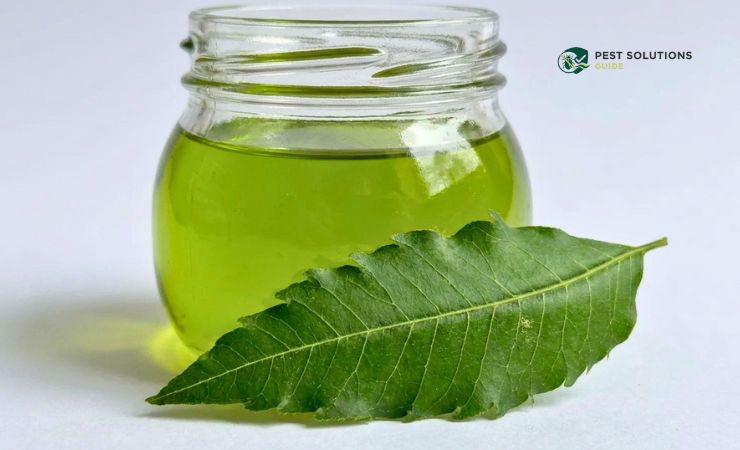
Cold-pressed neem oil (2 tablespoons): This is the raw, unrefined oil that keeps azadirachtin, which fights pests. Avoid refined or heat-treated neem oil, as it loses effectiveness. You can also use clarified hydrophobic neem oil, which works well against soft-bodied insects but is not as effective overall.
Pure liquid castile soap (1 teaspoon): This soap is your emulsifier. Oil and water don’t mix, so the soap helps them blend, and the spray sticks to plant leaves. If needed, you can use Dawn dish soap, but castile soap is gentler on plants over time.
Warm water (1 quart or 32 ounces): Helps the oil mix better. Cold water makes it harder to combine everything. You can use regular tap water.
Tools I Recommend
- 32-ounce spray bottle with an adjustable nozzle
- Measuring spoons to measure accurately
- Small mixing bowl or jar for blending oil and soap
- Gloves, as neem oil has a strong smell

How to Mix Neem Oil Spray Step by Step
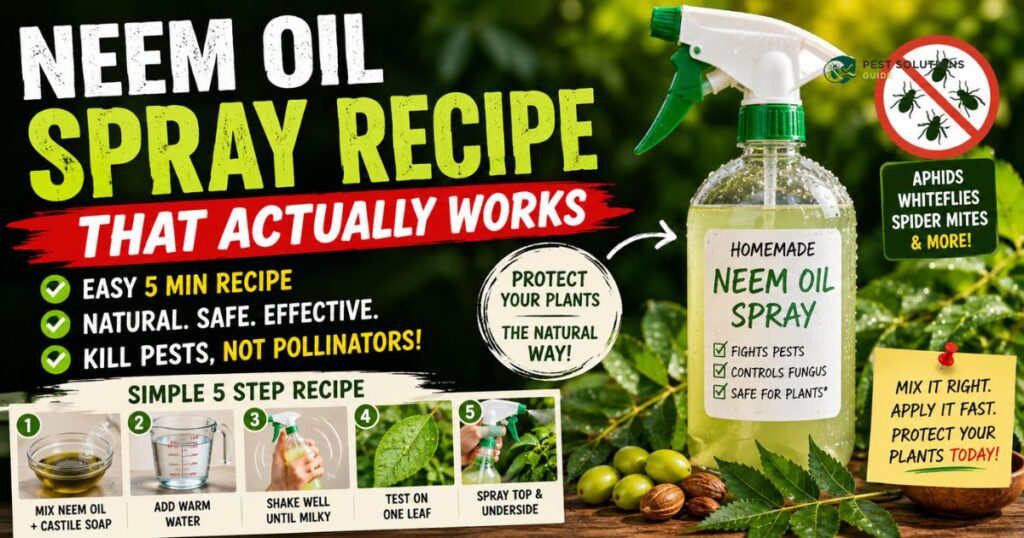
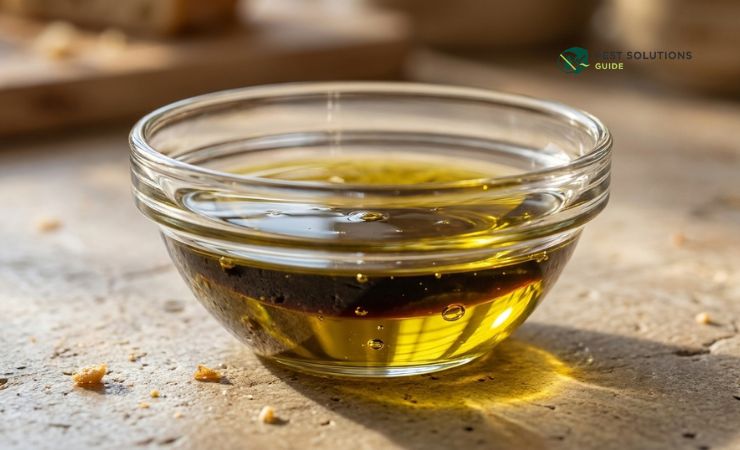
1. Blend the Oil and Soap Together First: Pour 1 teaspoon of castile soap into a small bowl or jar. Then add 2 tablespoons of neem oil. Stirring them together before adding water helps the oil and soap combine well and prevents separation.
2. Fill Your Spray Bottle With Warm Water: Fill a 32-ounce spray bottle with warm water, leaving some space at the top. Make sure the water is warm, but not hot, because hot water can reduce neem oil’s effectiveness.
3. Pour in Your Oil and Soap Blend: Pour the neem oil and soap mixture into the bottle with warm water. Tighten the cap and shake gently for 20 to 30 seconds. If the liquid looks milky or cloudy, it has mixed well. If you see clear oil on top, shake it again and add a little more soap.
4. Test on One Leaf Before You Commit: Before spraying the whole plant, test the mixture on one leaf and wait 24 hours. Some plants, especially delicate herbs, may react differently. If the test leaf looks fine after a day, you can spray the rest of the plant.

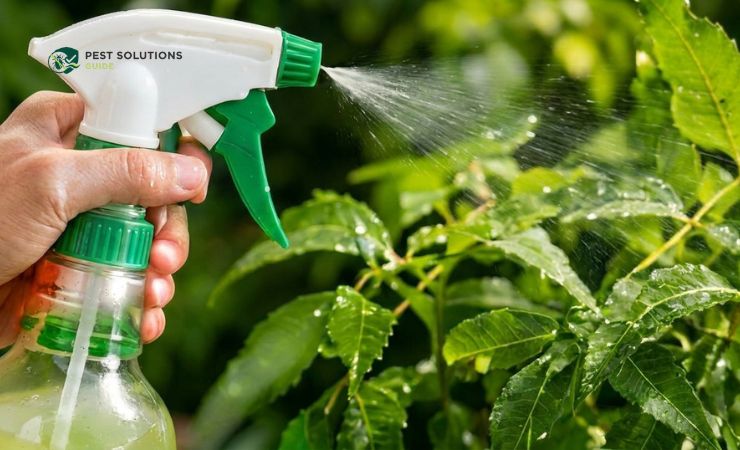
5. Spray Every Leaf Top and Bottom Hold the bottle 6 to 8 inches from the plant and spray both the top and underside of each leaf. Many pests hide on the undersides, so cover that area. Apply until the liquid drips. Repeat every 7 to 14 days, or after heavy rain.
How Neem Oil Actually Kills Pests at Every Stage
Disrupts Growth: Neem oil, which contains azadirachtin as its main ingredient, prevents insects from developing, prevents them from laying eggs, and reduces their appetite. It doesn’t kill insects right away but disrupts their breeding over time.
Suffocation: When neem oil covers soft-bodied insects like aphids or spider mites, it can block their breathing holes, killing them on contact is especially effective on larvae and nymphs that do not have a protective outer shell.
Extra Protection: Neem oil can harm fungal cells, making it useful against problems like powdery mildew, rust, and downy mildew. While it’s not as strong as other fungicides for serious infections, it can handle mild cases well.
Continues to Work After Drying: After neem oil dries on leaves, it stays effective for several days. Insects that eat the treated leaves will still consume azadirachtin. That’s why it’s important to reapply every one to two weeks to keep pest pressure low, even between sprays.
Why Eggs Are Harder to Eliminate Than Adult Eggs: Eggs have a protective coating that makes them difficult to reach with liquids. Neem oil can reduce the chance of eggs hatching, but it usually doesn’t kill all the eggs at once, which is why repeated spraying is vital. Each new spray targets the eggs that hatch after your last application.
Mistakes That Waste Your Neem Oil Spray
First, don’t use heat-treated or refined neem oil. If the label doesn’t say “cold-pressed,” it probably has too little azadirachtin to be effective.
Avoid spraying during the hot, sunny part of the day. The oil can evaporate quickly, and wet leaves can get scorched. Instead, spray in the early morning or just before sunset.
Using too little soap is another mistake. You need enough soap to mix the oil with water. I recommend at least one full teaspoon of soap per quart of water.
Lastly, don’t store leftover spray for more than 24 hours. The neem oil breaks down quickly when mixed with water. Always mix a fresh batch for each use; don’t save any for later.
When Your Pest Problem Needs More Than a Spray Bottle
If you have a pest problem that’s too big for a spray bottle, it’s time to call a professional. Neem oil spray is great for preventing pests and treating light infestations, but it won’t work for serious issues like cockroaches, termites, or bed bugs.
Remember, neem oil is meant for plants, not for structural pest control. If you notice significant damage to wood in your home or if pests from outside have moved in, contact a licensed pest control expert. It’s perfectly okay to do so. Professionals have access to stronger tools and treatments that homeowners cannot use, and some pest problems can spread quickly.
Start with neem oil for outdoor pests. If it doesn’t work, hand the problem over to someone who can help more effectively.
My Lazy-Day Pick When I Don’t Want to Mix Anything
Mixing your own pest spray is helpful, but sometimes you need a ready-to-use product. I keep Bonide Captain Jack’s Neem Oil available for this reason. It requires no measuring, mixing, or mess. I used it for a serious spider mite problem, sprayed it twice, and the issue disappeared.
It works on pests at all stages: eggs, larvae, and adults. It also helps with fungal issues. Almost 48,000 Amazon shoppers say it works well.

Neem Oil Spray Questions Homeowners Ask Most
1. How often should I spray neem oil on my plants?
I apply neem oil spray every 7 to 14 days when pests are active and once every 2 to 3 weeks as a preventive measure. Rain can wash away the treatment, so reapply after it rains. Consistency is key—one application rarely fixes the problem. Think of it as pest management, not a one-time fix.
2. Can too much neem oil burn my plants?
Yes, it can. Using too much neem oil, especially in direct sunlight or hot weather, can cause leaf burn and browning tips. Always test the spray on one leaf before treating the whole plant. Follow the recipe: 2 tablespoons of neem oil per quart of water. If your plants seem stressed after the first spray, dilute the mixture slightly for next time.
3. Is neem oil spray safe to use on vegetables?
Yes, neem oil is safe for edible crops when used correctly. I always wash vegetables well before eating them, no matter what was used in the garden. Avoid spraying directly on fruits or vegetables close to harvest. The oil breaks down quickly in sunlight, leaving no harmful residue after a day or two.
4. Which insects does neem oil spray kill best?
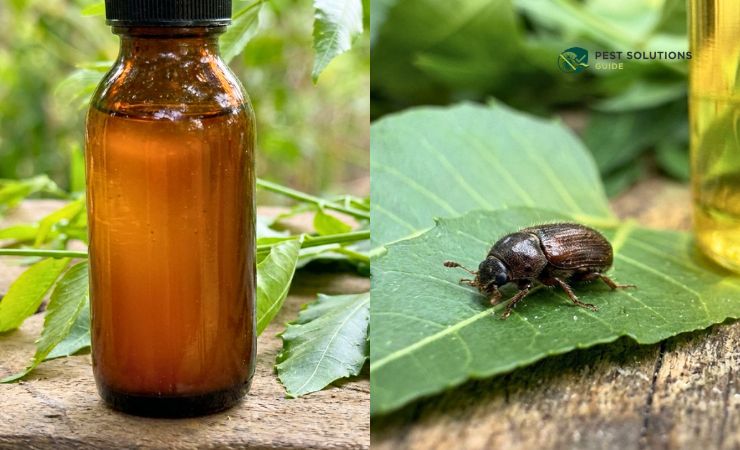
Neem oil works on many soft-bodied insects, like aphids, spider mites, whiteflies, mealybugs, thrips, and fungus gnats. It also targets caterpillars and some young beetle larvae. It is less effective on hard-shelled adult beetles or fully grown insects. For best results, focus on nymphs and larvae, which are the most vulnerable stages.
5. Will neem oil harm bees or other beneficial insects?
Neem oil is low in toxicity to most beneficial insects, but wet spray can harm any insect it directly touches. Ladybugs, lacewings, and bees are at low risk once the spray dries. To protect them, spray early in the morning or late in the evening when these insects are less active. Avoid spraying open flowers, where pollinators spend time.
6. How long does mixed neem oil spray stay good?
A mixed neem oil spray starts to break down within 8 to 12 hours. I only mix what I plan to use in one session. Storing the leftover mixed spray leads to a weaker solution that may not stick well to leaves. Keep unmixed neem oil sealed in a cool, dark place, and it will stay strong for 1 to 2 years.
7. Is neem oil spray safe around dogs and cats?
Neem oil is generally safe around pets once it has dried on the plants. Avoid letting pets lick freshly sprayed leaves or walk through wet spray. The smell of neem oil is strong, so most pets will naturally avoid treated plants. If your dog likes to chew on garden plants, wait until the spray is completely dry before letting them back in the yard.
Neem Oil Spray Recipe
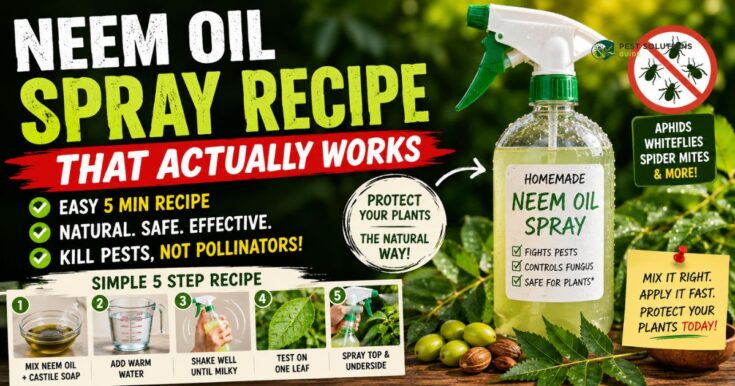
Try the Neem Oil Spray Recipe in just 7 minutes with 3 easy ingredients and no harsh chemicals. Protect your plants naturally today.
Ingredients
- Cold-pressed neem oil — 2 tablespoons
- Pure liquid castile soap — 1 teaspoon
- Warm water — 32 ounces (1 quart)
Instructions
- Pour 1 teaspoon of castile soap into a small bowl or jar. Then add 2 tablespoons of neem oil. Stirring them together before adding water helps the oil and soap combine well and prevents separation.
- Fill a 32-ounce spray bottle with warm water, leaving some space at the top. Make sure the water is warm, but not hot, because hot water can reduce neem oil's effectiveness.
- Pour the neem oil and soap mixture into the bottle with warm water. Tighten the cap and shake gently for 20 to 30 seconds. If the liquid looks milky or cloudy, it has mixed well. If you see clear oil on top, shake it again and add a little more soap.
- Before spraying the whole plant, test the mixture on one leaf and wait 24 hours. Some plants, especially delicate herbs, may react differently. If the test leaf looks fine after a day, you can spray the rest of the plant.
- Hold the bottle 6 to 8 inches from the plant and spray both the top and underside of each leaf. Many pests hide on the undersides, so cover that area. Apply until the liquid drips. Repeat every 7 to 14 days, or after heavy rain.
A Neem Oil Spray Recipe is a great for controlling pests in your garden. It works best for small infestations and is affordable, effective, and safe to use. If you have a severe pest problem indoors, it’s best to call a professional.
You can handle the smaller issues. For more tips on natural pest control, check out my related post.