If mosquitoes treat your backyard like a buffet, you are not alone. A Lemon Eucalyptus Bug Repellent Recipe might be exactly what you have been missing, and the best part is that it costs almost nothing to put together. Mosquitoes are more than just annoying.
They carry diseases like West Nile virus and dengue fever, and a single bad summer can leave you dreading the outdoors entirely. Long-term use of heavy chemical repellents can irritate sensitive skin, especially in kids and older adults.
That is why so many people are turning to oil of lemon eucalyptus as a proven, plant-based option. In this guide, I will show you how to mix your own repellent at home, what ingredients actually work, and how to use it safely so you can stop hiding indoors.
- How Oil of Lemon Eucalyptus Actually Keeps Bugs Away
- Ingredients for Lemon Eucalyptus Bug Repellent
- Tools You Will Need
- Instructions for Lemon Eucalyptus Bug Repellent Recipe
- Which Biting Insects Will This Spray Actually Stop?
- How Long One Application Lasts and When to Reapply
- DIY vs. Store-Bought – Which One Should You Use?
- Top Products to Boost Your Repellent Results
- Your Top Questions Answered
- 1. Is lemon eucalyptus oil the same as lemon eucalyptus?
- 2. Can I use this recipe on my kids?
- 3. How do I know if my OLE repellent is actually working?
- 4. Does lemon eucalyptus repellent wash off in water?
- 5. Can I spray this on my clothing?
- 6. How long does a batch of homemade lemon eucalyptus repellent last?
- 7. Does lemon eucalyptus repellent work against ticks?
How Oil of Lemon Eucalyptus Actually Keeps Bugs Away
Oil of lemon eucalyptus, or OLE, is different from regular eucalyptus essential oil, which is important to know. OLE comes from the lemon eucalyptus tree and has a chemical called PMD (para-Menthane-3,8-diol). PMD helps to keep mosquitoes and other biting insects away, and the CDC recommends it as one of the few plant-based repellents, along with DEET.
I tried several essential oil sprays before using OLE, and I noticed a big difference. Regular eucalyptus oil has a strong smell but doesn’t provide much protection. OLE, which has a high concentration of PMD, worked well for 2 to 3 hours outdoors in the evening. Studies show it works as well as low-concentration DEET, which is impressive for a plant-based product.
PMD works by confusing mosquitoes’ sensory receptors that detect human skin. It doesn’t just smell bad to them; it actually makes it harder for them to find you, which is a key difference between OLE and most homemade herbal sprays, which rely only on smell.
One important note: the CDC advises against using OLE products on children under three years old. If you have a toddler, check with your pediatrician before using any repellent, whether it’s natural or not.
Ingredients for Lemon Eucalyptus Bug Repellent
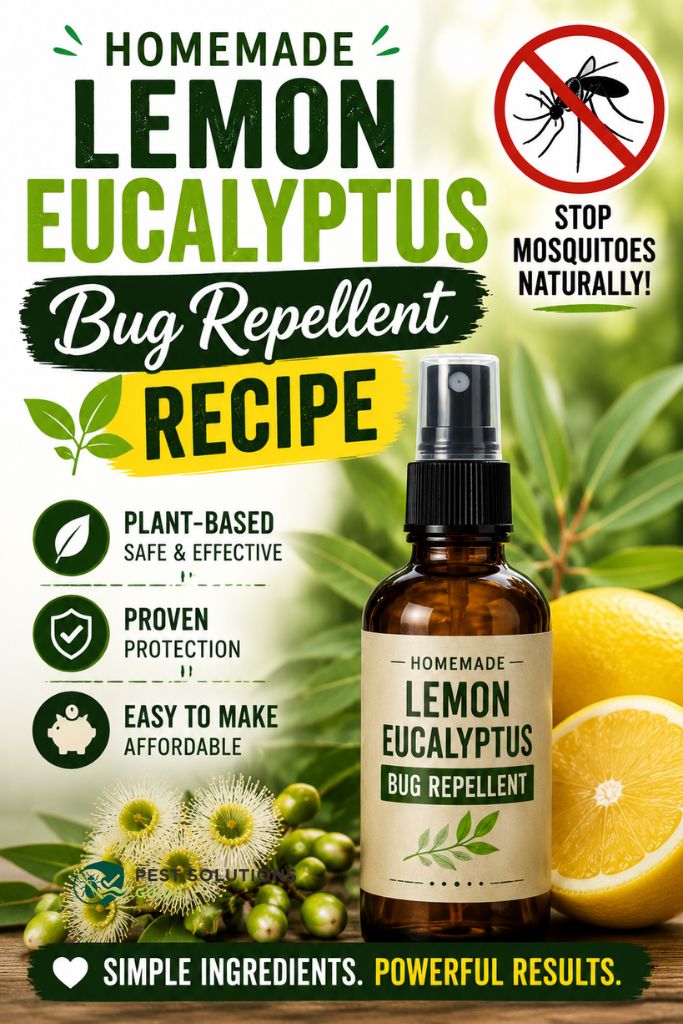
Oil of Lemon Eucalyptus (OLE): Use 30 drops (about 1.5 ml). Ensure it is labeled OLE or lists PMD. Do not use regular eucalyptus oil; it won’t work as well. Brands like Repel and Cutter offer concentrated OLE.
2 oz Witch Hazel or Rubbing Alcohol (91%): This is the base that helps evenly mix the OLE. Witch hazel is gentler on the skin. You can also use 91% isopropyl alcohol, which evaporates quickly but can dry the skin.
1 oz Distilled Water: Use distilled water because tap water may have minerals that weaken the mixture. Distilled water helps the formula last longer.
Vegetable Glycerin: Use 1 teaspoon (optional) to help the spray stick to your skin longer and to reduce dryness from alcohol. You can skip it if you don’t have it.
4 oz Dark Glass Spray Bottle: Use a dark glass bottle to protect the OLE from light, helping it remain effective longer. Don’t use plastic or clear glass.
Tools You Will Need
- Small measuring cup or graduated dropper
- Funnel (for pouring into the spray bottle)
- Label and marker (to date your batch)
- Small whisk or stir stick
Instructions for Lemon Eucalyptus Bug Repellent Recipe
1. Add Witch Hazel or Alcohol First: Pour 2 oz of witch hazel or rubbing alcohol into your spray bottle first to help the OLE mix well and prevent it from sticking to the sides.
2. Add the Oil of Lemon Eucalyptus: Add 30 drops of OLE using a dropper or dispenser; this gives about a 10% concentration and is effective for about 2 hours against mosquitoes. Using more than 15% won’t offer more protection and may irritate sensitive skin.
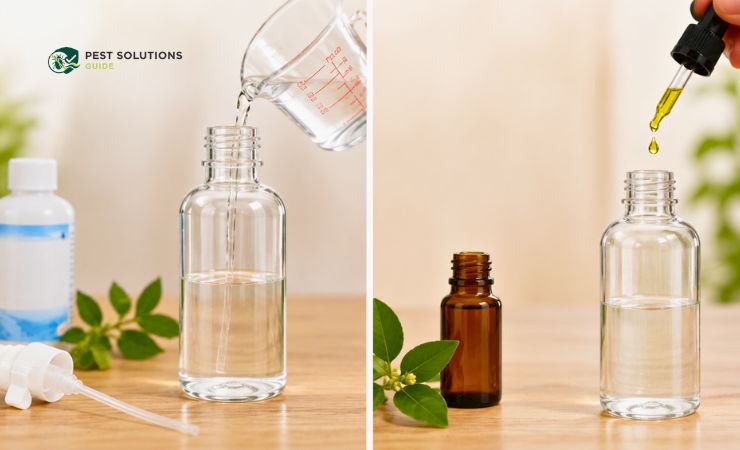
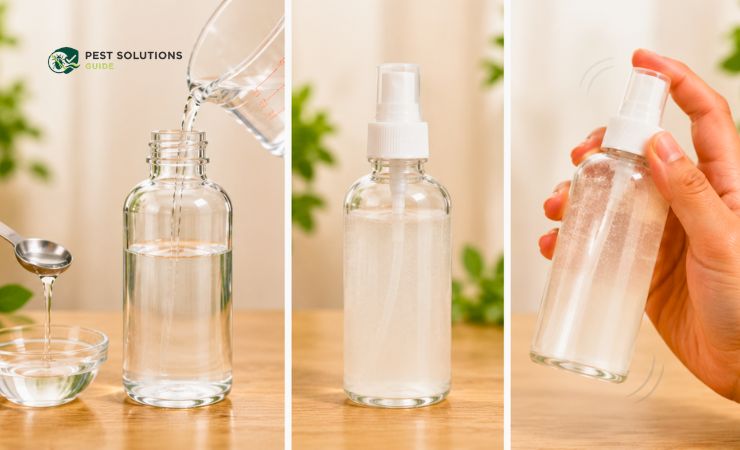
3. Add Distilled Water and Glycerin: Pour in 1 oz of distilled water, then add 1 teaspoon of vegetable glycerin, if using. The glycerin may appear thick at first, but it will mix well if you shake the bottle. Avoid using tap water since it shortens the spray’s shelf life.
4. Cap and Shake Well: Seal the spray bottle tightly and shake for about 30 seconds. OLE and water don’t mix, so shake it each time before you spray. Label your bottle with the date; this batch is good for up to three months if kept away from heat and light.
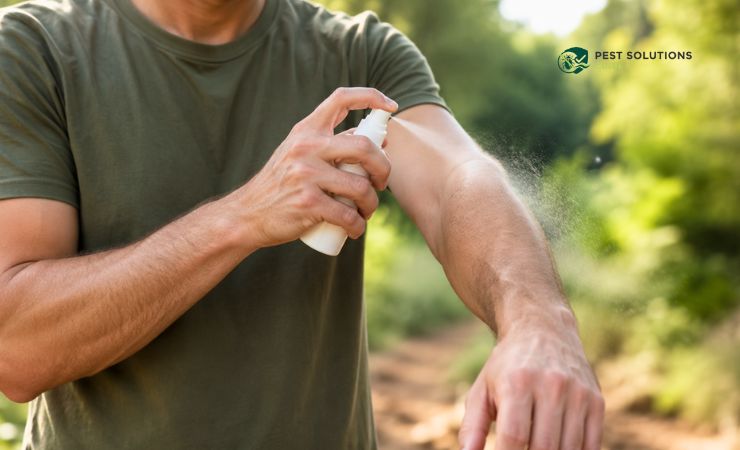
5. Apply Before Going Outside: Spray the repellent on your exposed skin and outer clothing, avoiding your eyes and mouth. Focus on spraying your arms, ankles, and the back of your neck, as these areas are often where mosquitoes land. Reapply every two hours, especially if you sweat. Always do a patch test on your inner wrist the first time to check for skin sensitivity.
Which Biting Insects Will This Spray Actually Stop?
Nobody wants to spend time making a bug repellent that doesn’t work. The good news is that OLE has solid research supporting its effectiveness against several common pests, especially mosquitoes. It works best against Aedes aegypti mosquitoes, which spread dengue, Zika, and chikungunya. When used correctly, it can help prevent these diseases.
OLE also offers some protection against deer ticks, which carry Lyme disease. While it’s not as effective as permethrin-treated clothing for avoiding ticks, it provides extra protection when you hike or spend time in tall grass. I always use OLE spray with permethrin-treated socks and pants when I go into wooded areas.
OLE may also keep gnats and biting flies away, but it isn’t as strong against them as it is against mosquitoes. If gnats are a big problem for you, adding a few drops of peppermint oil to the recipe can help improve the results. It’s not a guaranteed fix, but I found it worked better on evenings when gnats were thick.
How Long One Application Lasts and When to Reapply
If you use a natural repellent, it’s important to have the right expectations. Sprays made with Oil of Lemon Eucalyptus (OLE) usually last between two and three hours per application, which is similar to a formula with 10% DEET. While that’s useful, it means you’ll need to reapply it more often than a product with 25-30% DEET.
Sweat and water can break down the repellent faster. If it’s a hot day and you’re active, I recommend reapplying every 90 minutes. On a cooler evening, sitting outside, you can expect the same amount to last about 3 hours. The glycerin in the recipe can help a bit, but you still need to reapply.
Where you store your repellent also matters. Keep the bottle in a cool, dark place, such as a bathroom cabinet or drawer. Heat and sunlight can quickly break down OLE. If you store it in a hot car or on a sunny windowsill, it can lose half its potency in just a week.
If you notice the spray separating after shaking, or if the scent fades significantly before three months, it’s time to make a new batch. Using a weaker formula can give you a false sense of safety, which is not what you want.
DIY vs. Store-Bought – Which One Should You Use?
A well-mixed homemade lemon eucalyptus bug repellent can work as well as commercial sprays if you use true OLE with documented PMD content. The recipe I shared above uses the same active ingredient found in products like Repel Lemon Eucalyptus Spray, which is one of the few plant-based repellents recommended by the CDC.
However, homemade versions can be less consistent. Commercial products undergo testing to confirm exact PMD levels. When you make your own, the effectiveness depends on the quality of the OLE you buy.
Always check the product label for PMD (para-Menthane-3,8-diol) as an active ingredient. If it only lists “eucalyptus essential oil” without PMD, that bottle won’t protect you well.
I still prefer to use commercial products when I travel, especially in high-risk areas like camping in the Northeast during peak tick season. For backyard evenings and light outdoor activities, my homemade version works well.
Top Products to Boost Your Repellent Results
Repel Plant-Based Lemon Eucalyptus Spray (6 oz): This is the commercial OLE spray I trust for a pre-made option that matches my DIY formula. It contains 30% OLE with verified PMD concentration, lasts up to six hours per application, and is CDC-recommended for real protection.

Cutter Lemon Eucalyptus Insect Repellent Spray: This spray is DEET-free and safe for adults and children over 3 years old. Cutter’s OLE formula addresses biting insects seriously. It works well in heat and humidity, when mosquitoes are most active.

Amber Glass Spray Bottles (4 oz, Set of 6): Using plastic bottles can break down your OLE faster than expected. These dark amber glass bottles protect the formula from light and heat, helping maintain PMD levels for the full three-month shelf life. The fine mist nozzle ensures even coverage and minimizes waste.

Your Top Questions Answered
1. Is lemon eucalyptus oil the same as lemon eucalyptus?
No, they are different, and this distinction is important for your safety. Lemon eucalyptus oil is a basic essential oil with a nice scent but limited bug-repelling abilities. Oil of lemon eucalyptus, however, is a refined extract that has PMD, the active ingredient recognized by the CDC as effective against mosquitoes.
Always check the label before buying. If it doesn’t list PMD or para-Menthane-3,8-diol, it won’t provide proper protection.
2. Can I use this recipe on my kids?
The CDC advises against using oil of lemon eucalyptus (OLE) on children under three years old. For kids aged three and older, OLE is safe and effective. It’s best to apply it to your hands first, then to your child’s skin, avoiding direct spraying. Keep it away from their eyes, mouth, and hands, since young children often touch their faces.
3. How do I know if my OLE repellent is actually working?
The best sign is fewer bites when you are outside during peak mosquito times, which are usually dawn and dusk. If you notice bites within 30 minutes of applying, the problem may be a weak OLE source or a formula that degrades from heat.
Shake the bottle well before each use, reapply every two hours, and ensure your OLE lists PMD as an active ingredient. If it has a strong, fresh citrus-eucalyptus scent after shaking, it’s likely still effective.
4. Does lemon eucalyptus repellent wash off in water?
Yes, both water and sweat can reduce the effectiveness of any topical repellent, including OLE. If you swim or sweat a lot, reapply the spray once you dry off. The glycerin in this recipe offers minimal protection but doesn’t make the formula waterproof. Think of it like sunscreen: you need to reapply after getting wet, and the same goes for this repellent.
5. Can I spray this on my clothing?
You can spray OLE on the outside of your clothes, and it works well on fabric. Avoid spraying synthetic materials such as rayon or spandex, as they can discolor over time. Natural fibers like cotton are fine.
For better tick protection, combine your OLE spray with permethrin-treated clothing. The combination provides stronger coverage than either alone.
6. How long does a batch of homemade lemon eucalyptus repellent last?
When stored correctly in a dark glass bottle and away from heat, a batch remains effective for up to three months. You may notice it’s losing potency if the scent fades after shaking or if the mixture doesn’t stay mixed. I write the mix date on the label so I know when to refresh it.
7. Does lemon eucalyptus repellent work against ticks?
OLE does give some protection against deer ticks, but it shouldn’t be your only tick prevention method. Research shows it can deter ticks moderately when applied to exposed skin. For full tick protection, combine OLE spray with permethrin-treated clothing, check your body after being outdoors, and tuck your pants into your socks in wooded areas.
Lemon Eucalyptus Bug Repellent Recipe
Lemon Eucalyptus Bug Repellent Recipe made simple, stop mosquitoes naturally with ingredients you already own. See how to make it today.
Ingredients
- 30 drops Oil of Lemon Eucalyptus (OLE) with PMD listed as active ingredient
- 2 oz witch hazel or 91% rubbing alcohol
- 1 oz distilled water
- 1 tsp vegetable glycerin (optional)
Instructions
- Pour 2 oz of witch hazel or rubbing alcohol into your spray bottle first to help the OLE mix well and prevent it from sticking to the sides.
- Add 30 drops of OLE using a dropper or dispenser; this gives about a 10% concentration and is effective for about 2 hours against mosquitoes. Using more than 15% won’t offer more protection and may irritate sensitive skin.
- Pour in 1 oz of distilled water, then add 1 teaspoon of vegetable glycerin, if using. The glycerin may appear thick at first, but it will mix well if you shake the bottle. Avoid using tap water since it shortens the spray’s shelf life.
- Seal the spray bottle tightly and shake for about 30 seconds. OLE and water don’t mix, so shake it each time before you spray. Label your bottle with the date; this batch is good for up to three months if kept away from heat and light.
- Spray the repellent on your exposed skin and outer clothing, avoiding your eyes and mouth. Focus on spraying your arms, ankles, and the back of your neck, as these areas are often where mosquitoes land. Reapply every two hours, especially if you sweat.
- Always do a patch test on your inner wrist the first time to check for skin sensitivity.
A Lemon Eucalyptus Bug Repellent Recipe is an effective and affordable way to combat mosquitoes and biting insects without harsh chemicals. The DIY version works well for most backyard situations, ensuring it uses true OLE with PMD. For high-risk tick areas or travel, choose a tested commercial product.