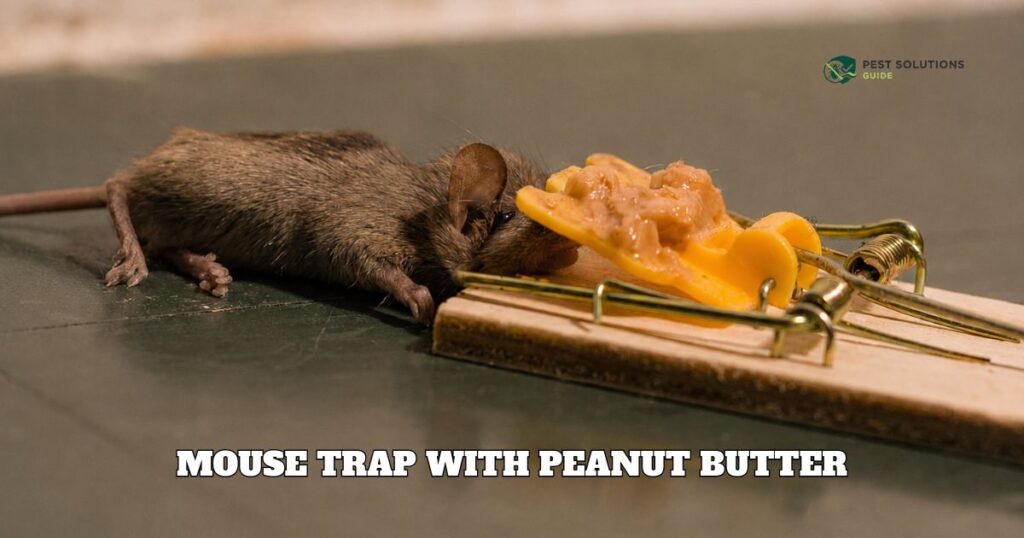
You’ve probably seen cartoons where a mouse goes wild for cheese. However, in real life, Mouse Trap With Peanut Butter works much better as bait in mouse traps. I tested both on snap traps in my garage. The thick, sticky peanut butter makes it hard for the mouse to grab it and run away.
The mouse has to stop and work for it, which triggers the trap at the right time. If you ignore one mouse, you might face a bigger problem by the end of the month. In this guide, I will show you how to bait, set, and place your traps so you can effectively stop mice without guesswork.
You want the mouse to push down on the trigger to reach the bait, not just lick it from the side.
- Why Peanut Butter Outperforms Cheese as Mouse Trap Bait
- How to Set a Mouse Trap With Peanut Butter the Right Way
- Where to Place Your Peanut Butter Mouse Trap for Best Results
- Recommended Tools and Traps for the Job
- Step-by-Step Instructions for Catching a Mouse With Peanut Butter Bait
- What Else Actually Kills Mice Besides Snap Traps
- Best Mouse Trap Products Worth Buying
- Frequently Asked Questions About Mouse Traps and Peanut Butter
- 1. Is peanut butter the best bait for mouse traps?
- 2. How much peanut butter should I use on a mousetrap?
- 3. How long does it take to catch a mouse with peanut butter bait?
- 4. What if the peanut butter gets eaten, but the trap does not fire?
- 5. Can I use peanut butter in live catch traps, too?
- 6. Should I wear gloves when handling mouse traps?
- 7. Does finding one mouse mean I have an infestation?
Why Peanut Butter Outperforms Cheese as Mouse Trap Bait
If you saw a mouse running across your floor last night, you are not alone. Many people deal with this. A good first step is to use a mousetrap with peanut butter. Mice can chew on wires, spoil food, and spread diseases quickly. Peanut butter has a strong smell that attracts mice.
Mice use their noses to find food, and peanut butter’s scent can fill up a room.
Even if a mouse is hiding behind a wall or in a cabinet, it can still smell it. I have found that peanut butter catches mice faster than cheese, lunch meat, or chocolate. So, if you need effective bait, always use peanut butter. It’s cheap, easy to find, and you likely already have some in your pantry.
You do not need any fancy bait stations or special lures. Just place a pea-sized amount on the trigger pad of a snap trap. If you use more than that, you waste bait and give the mouse an easy meal.
How to Set a Mouse Trap With Peanut Butter the Right Way
No one wants to deal with a mousetrap and hurt their fingers. Trust me, I’ve done it more than once. Setting a mouse trap with peanut butter takes about 30 seconds once you know how. The key is to use the right amount of bait, place it correctly in the trap, and set the spring carefully.
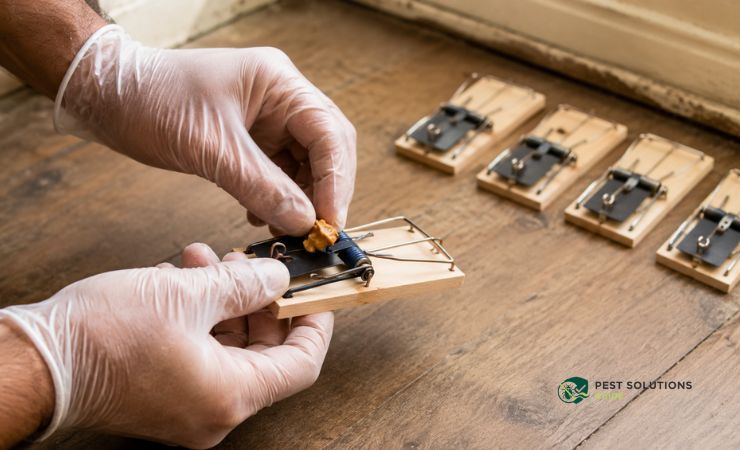
Start by putting on disposable gloves. Mice can smell human scent on the trap and will stay away. Use a toothpick or a small butter knife to spread a pea-sized dab of peanut butter directly onto the trigger plate, which is the small flat piece in the center of the trap. Press it in slightly so it sticks.
After the bait is set, open the spring bar carefully. Most basic snap traps have a holding bar that you fold back and hook onto the trigger plate. Do this slowly and keep your fingers away from the kill bar. Place the trap on a flat surface before arming it, so you don’t fumble on the floor.
Once it clicks into position, slide it gently into place without bumping it.
Where to Place Your Peanut Butter Mouse Trap for Best Results
If your trap is in the wrong spot, it won’t work, no matter how well it’s loaded. Mice have habits; they usually move along walls, behind appliances, and under cabinets, not in the middle of a room. I’ve seen people set traps in the middle of the kitchen floor without catching anything for weeks.
If you move those traps to the edges, you will see results.
Place your trap against the wall, with the trigger end facing the wall. Mice tend to sniff along the baseboard so that they will approach the bait side first. I like to put traps behind the refrigerator, under the stove, inside cabinet toe kicks, and along the back wall of the garage. These spots work well.
Instead of using one trap, set multiple traps. If you have one or two mice, two or three traps will be enough. But if you hear scratching in the walls or see droppings in different rooms, use six to eight traps at once. Mice are not as careful as rats. They will investigate a trap within a day or two if the bait smells strong.

Recommended Tools and Traps for the Job
- Victor Original Snap Trap: This trap is classic, reliable, and inexpensive.
- Catchmaster Multi-Catch Glue Boards: These are good for checking for rodent activity.
- Tomcat Press ‘N Set Mouse Trap: This trap is easy to set up and safe.
- Ortho Home Defense Perimeter Spray: This product helps seal entry points.
- Disposable Nitrile Gloves: Always wear these when handling traps.
Step-by-Step Instructions for Catching a Mouse With Peanut Butter Bait
1. Get Your Supplies: Buy several snap traps from a hardware store or online. Wooden or plastic traps work well. You will also need peanut butter, disposable gloves, a toothpick or small knife, and a trash bag. Having everything ready will help you.
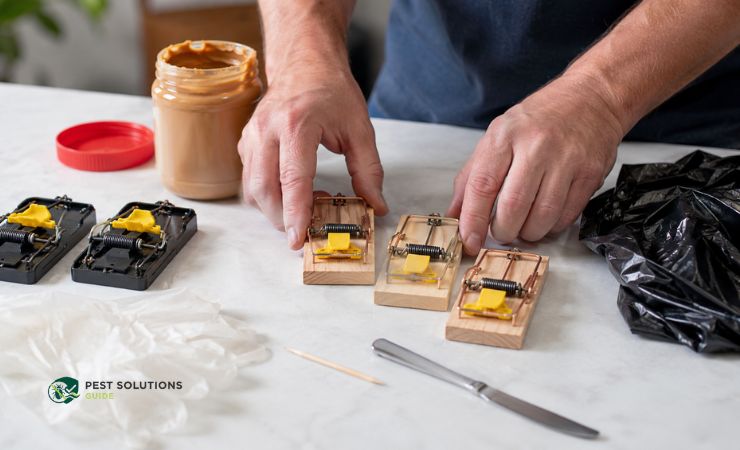
2. Put the Peanut Butter on the Trap: First, wear your gloves. Take a small amount of peanut butter and press it into the middle of the trigger plate. Don’t spread it on the sides or use too much. A small dab makes the mouse step on the trigger to reach the bait. Using too much bait lets the mouse eat around it without setting off the trap.
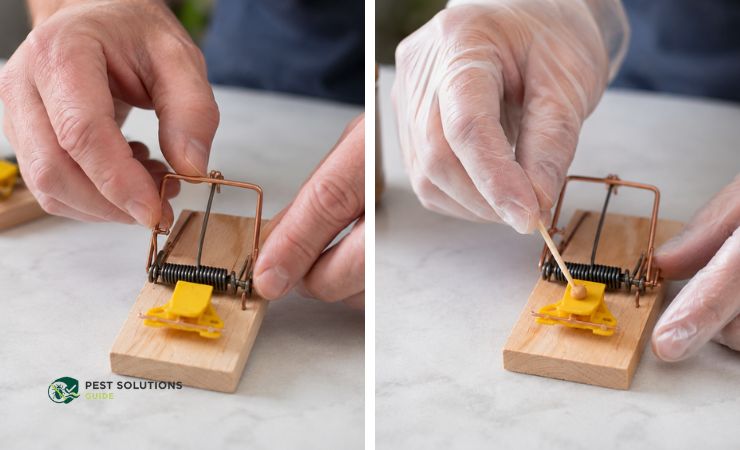
3. Set the Trap: Place the trap on a flat surface. Pull back the kill bar and hook the holding bar into the notch on the trigger plate. Move slowly and keep your fingers away from the strike area. When you hear a click, the trap is set. Be careful not to jostle it while moving it to where you want to place it.
4. Place the Trap: Carry the armed trap to your chosen spot. Set it against the wall with the bait end facing the baseboard. Press it gently against the wall to keep it stable. If the floor is slippery, put the trap inside a shoebox with small entry holes cut on each side, to keep pets and kids from touching it.
5. Check and Reset Daily: Check your traps every morning. Leaving a dead mouse in a trap for days can cause bad smells and attract other pests. If the trap went off but didn’t catch anything, reset it with fresh peanut butter in the same spot. Mice usually come back to places they have visited before.
Keep traps in areas where you have caught mice before.
What Else Actually Kills Mice Besides Snap Traps
Snap Traps: The most reliable mechanical option. They kill mice instantly when set up correctly. Using peanut butter as bait and placing the traps properly will make them work better than most other methods.
Glue Boards: These catch mice but do not kill them right away. I use them near entry points to monitor mouse activity, not as my main method. They can be inhumane if not checked daily.
Electric Traps: These battery-powered traps deliver a quick shock to kill mice. They are easier to empty than snap traps. They cost more but are great if you dislike handling dead mice.
Rodenticide Bait Stations: These hold poison bait blocks in a lockable station. They work, but they can be risky if you have pets or small children. A mouse that eats poison might die inside a wall and cause odor problems.
Extreme Cold and Heat: Temperatures below 32°F for several days can kill mice in open areas. Heat above 120°F can also be deadly, but this requires special equipment and isn’t practical for an entire home.
Peppermint Oil: Mice dislike the strong smell. I place it on cotton balls near entry points to deter them, not to kill them. It slows them down but doesn’t get rid of an active infestation.
Best Mouse Trap Products Worth Buying
VRXVR Mouse Traps 12-Pack

When you catch a mouse, the no-touch side-squeeze release lets it drop out cleanly. The ABS plastic can be washed and doesn’t hold odors like wood. These traps are easier to set up and clean than Victor wooden traps. However, some traps may not stay latched after several uses, so check each one before putting it out.
These traps are good for covering larger areas safely, making them ideal for multi-room infestations, garages, basements, and beginners.
Victor M150-12 Metal Pedal Snap Mouse Traps

This trap is more durable than the VRXVR model, but it needs careful setup to keep your thumb away from the kill bar. You can throw it away after catching a mouse or clean it with a quick bleach rinse. Use these traps if you want a reliable option, especially in attics, crawl spaces, or busy rodent areas.
They are best for experienced users, heavy infestations, and cases where mice ignore newer traps.
Victor M250BSR-2 Electronic Mouse Trap

Just place a pea-sized dab of peanut butter in the bait cup, switch it on, and set it along the wall. Disposal is simple: flip the lid over a trash bag. Although it costs more upfront and needs battery replacements, it gives a completely hands-off experience. Some users say it can smell if you leave a catch inside too long, so check it daily.
These traps are best for people who want to avoid contact with mice and care about cleanliness.
Tomcat Press ‘N Set Mouse Trap

This trap is safer to set up compared to wooden traps and cheaper than electronic traps. However, some users say the plastic can break if it doesn’t catch anything, so check each one before use. This trap is ideal for anyone worried about finger safety or wanting quick and clean results without batteries or electricity.
It is best for beginners, families with kids nearby, and anyone who has pinched their fingers using traditional traps before.
Frequently Asked Questions About Mouse Traps and Peanut Butter
1. Is peanut butter the best bait for mouse traps?
Yes, peanut butter is one of the best baits for mouse traps. Its strong smell attracts mice, and its sticky texture makes it hard for them to grab without setting off the trap. Cheese, chocolate, and cotton balls can also work, but peanut butter is usually more effective.
Many pest control experts recommend it. If you want quick results, start with peanut butter.
2. How much peanut butter should I use on a mousetrap?
Use a small amount of peanut butter about the size of a pea or a small gum ball. If you use too much, a mouse may eat from the edges without triggering the trap. Place the small amount directly in the center of the trigger so the mouse must push down to get it.
Change the bait every two to three days if the trap hasn’t caught anything.
3. How long does it take to catch a mouse with peanut butter bait?
A well-placed trap can catch a mouse within 24 to 48 hours. Mice are most active at night so that you might find a catch by morning. If the trap doesn’t catch anything in three days, try moving it. Placement is just as important as the bait.
Areas with a lot of mouse activity, like behind appliances or along baseboards, usually work best. Don’t give up after just one night.
4. What if the peanut butter gets eaten, but the trap does not fire?
It can be frustrating. It usually means the bait was applied too loosely or too much was used. If a mouse licked the peanut butter off without triggering the trap, try using a smaller amount directly in the center of the plate.
You can also use a toothpick to press the bait in so it sticks better. Some people use chunky peanut butter, as its texture makes it harder for mice to lick clean without setting off the trap.
5. Can I use peanut butter in live catch traps, too?
Yes, peanut butter works well in live catch traps. Place the bait at the back of the trap so the mouse has to go inside before the door closes. Check live traps at least twice a day. A trapped mouse can get stressed or dehydrated if left too long.
When you release a caught mouse, do it at least a mile away from your home to prevent it from coming back. Live traps are humane but need more attention than snap traps.
6. Should I wear gloves when handling mouse traps?
Yes, always wear disposable gloves when you set, check, or move any mousetrap. Human scent can make mice wary and cause them to avoid the area. Gloves also protect you from diseases that mice can carry in their droppings, urine, and contact. Nitrile gloves are inexpensive, disposable, and easy to use.
There’s no good reason to skip this step. After handling a used trap, seal it in a plastic bag before disposing of it.
7. Does finding one mouse mean I have an infestation?
Finding one mouse doesn’t always mean you have an infestation, but it is a warning sign you shouldn’t ignore. Mice usually don’t travel alone, so if you see one, there are likely more nearby. Look for droppings along walls, gnaw marks on food packaging, and grease smudges along baseboards, all signs of activity.
If you set four or more traps and catch multiple mice in a week, that shows a bigger problem that might need professional help. Act quickly, as even one mouse can reproduce rapidly.
A Mouse Trap With Peanut Butter is a simple and effective tool for homeowners. If you see one or two mice, a DIY snap trap in the right spot can help. If you have more mice or see signs of them living in your walls, it’s best to call a professional. You can handle this! Please share your experiences in the comments.