Fungus gnats are small pests that can be very annoying for your houseplants. You water your plants, leave the room, and suddenly see a cloud of gnats rise from the soil. If this sounds like your experience, a DIY Fungus Gnat Trap can help you quickly get rid of them, and you likely have most of what you need at home.
These pesky bugs can hurt your plants by eating their roots, which weakens them over time. If you don’t take care of the problem, a few gnats can quickly turn into a bigger infestation in weeks. The good news is you don’t have to spend a lot of money to solve this issue.
In this guide, I’ll show you the best DIY fungus gnat traps, what effectively kills them, and which store-bought products I have used to speed up the process.
- What Causes Fungus Gnats in Houseplants?
- How to Make a DIY Fungus Gnat Trap Using Apple Cider Vinegar
- How to Use Sticky Cards as a DIY Fungus Gnat Trap
- What You Need to Build Your Fungus Gnat Traps
- Recommended Tools That Make the Process Easier
- Step-by-Step Instructions to Get Rid of Fungus Gnats Fast
- What Actually Kills Fungus Gnats for Good
- Why Gnat Eggs Are Harder to Eliminate Than Adults
- Best Products I Used to Get Rid of Fungus Gnats
- Frequently Asked Questions
- 1. Can a DIY fungus gnat trap get rid of gnats completely?
- 2. How do I know if I have fungus gnats or fruit flies?
- 3. Does apple cider vinegar really work as a fungus gnat trap?
- 4. How long does it take to get rid of fungus gnats?
- 5. Are fungus gnats harmful to humans?
- 6. Can I use hydrogen peroxide to kill fungus gnats?
- 7. Why do I keep getting fungus gnats even after treating my plants?
What Causes Fungus Gnats in Houseplants?
Fungus gnats usually come from overwatered soil. The moist, rich potting mix is perfect for these bugs. Adult gnats lay their eggs in the top inch of the soil. Within days, the larvae hatch and start feeding on plant roots and decaying matter.
When the soil stays wet for too long, it creates a great environment for gnats to breed. Sometimes, they can even come from bags of potting soil that were already infested. It’s a good idea to check the new soil before using it. The adults flying around do not damage plants; it’s the larvae underground that harm.
That’s why just swatting the flying gnats won’t help. You need to treat the soil to break the cycle for good.
How to Make a DIY Fungus Gnat Trap Using Apple Cider Vinegar
The best DIY trap for catching fungus gnats is made with apple cider vinegar. I have tested it, and it works well. You need a small bowl or cup, some apple cider vinegar, a drop of dish soap, and plastic wrap. The vinegar attracts the gnats, and the dish soap makes them sink so they can’t escape.
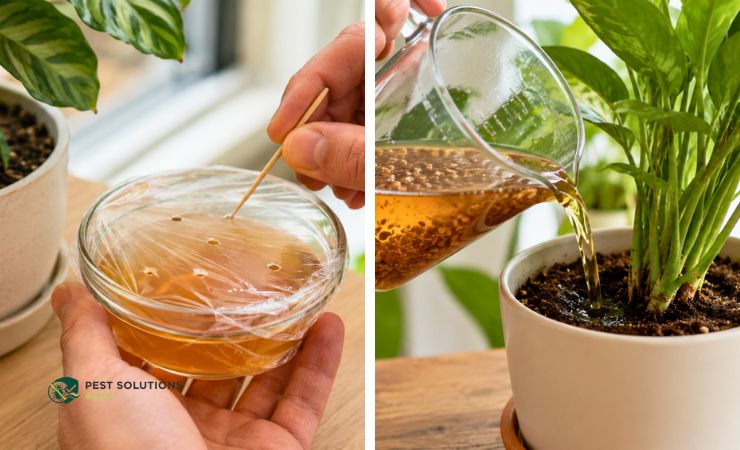
Here’s how to set it up: Pour about a quarter inch of apple cider vinegar into a small container. Add two or three drops of dish soap and stir gently. Stretch plastic wrap tightly over the top and poke five to ten small holes in it with a toothpick. The gnats will crawl through the holes because of the vinegar smell and can’t get back out.
You can also skip the plastic wrap and leave the bowl open. It will still catch plenty of gnats, especially if you put it near a plant with gnats. I usually set out two or three traps to catch more gnats. Replace the liquid every three to four days so it stays fresh and attractive to the gnats.
How to Use Sticky Cards as a DIY Fungus Gnat Trap
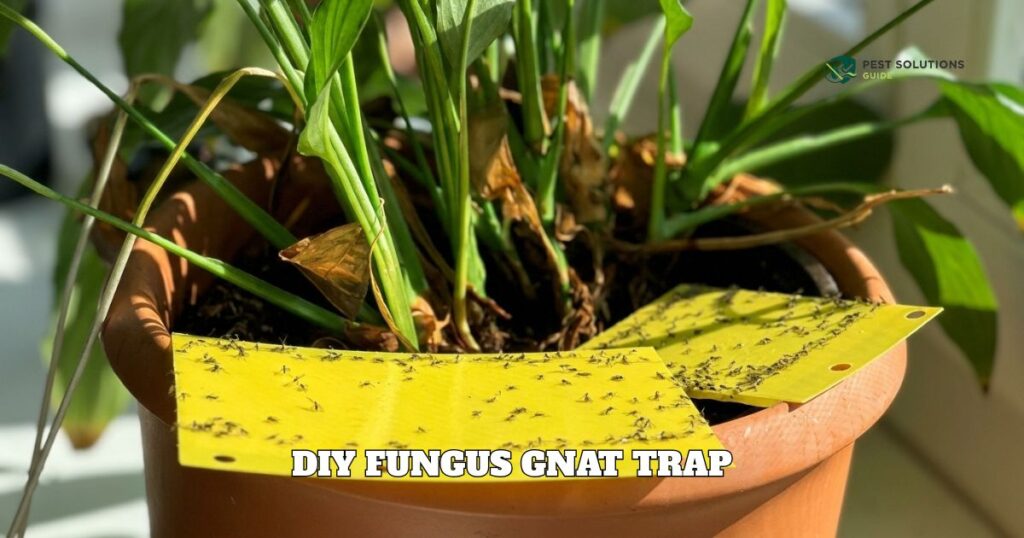
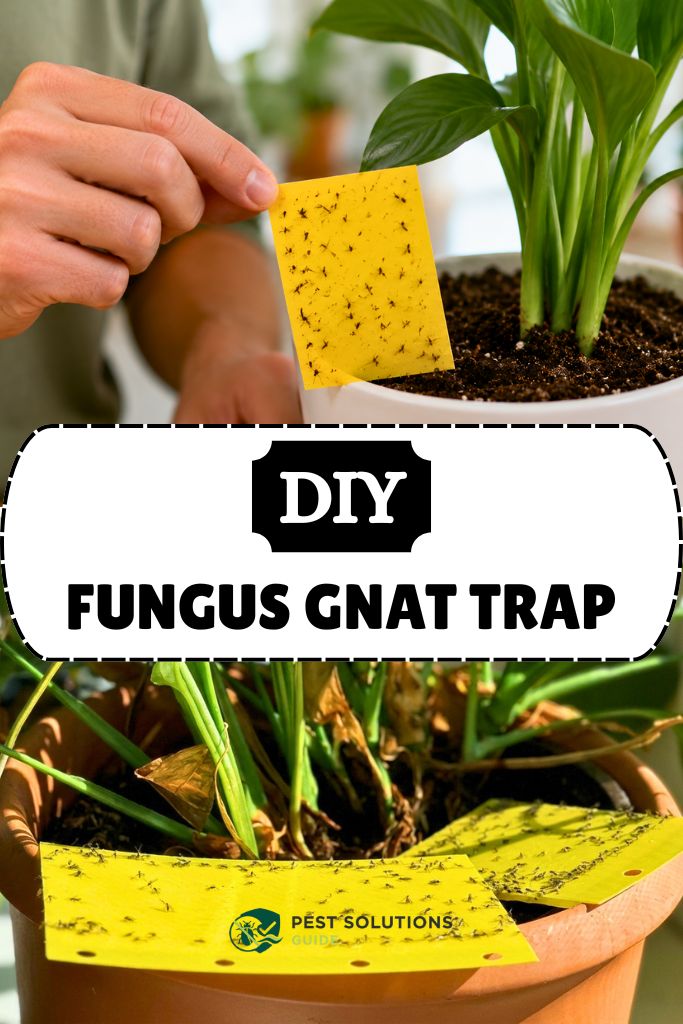
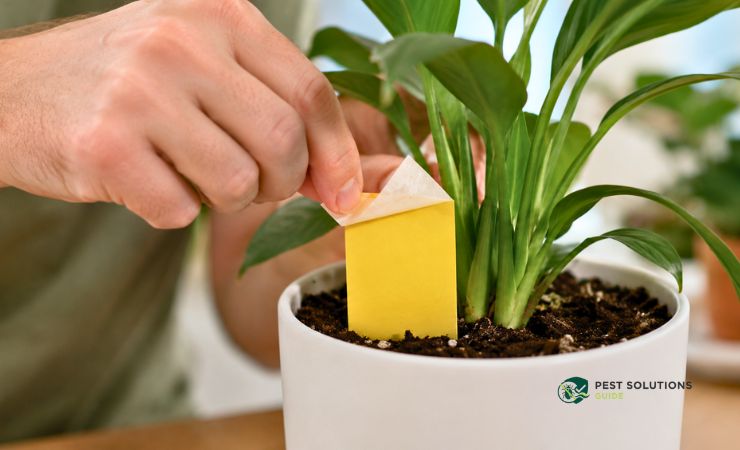
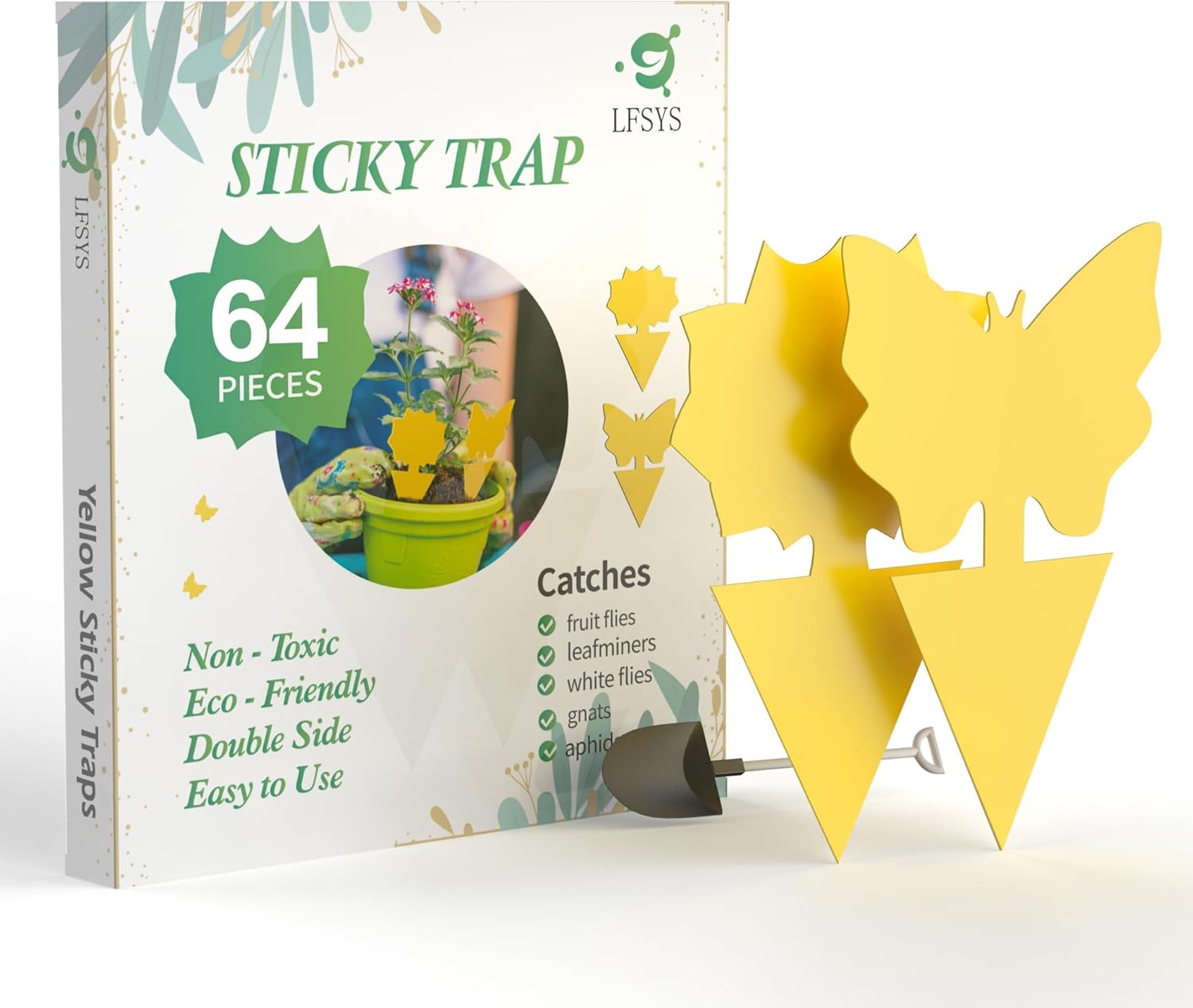
Sticky yellow traps are a simple and inexpensive way to catch fungus gnats. You can buy yellow sticky cards for a few dollars. These traps work because gnats are drawn to the color yellow. Just peel off the backing and place one card in the soil of each plant pot. I like to use sticky traps along with the vinegar bowl method.
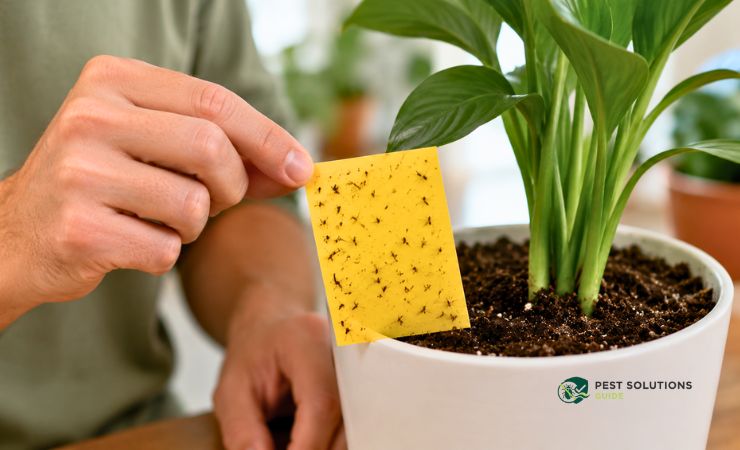
The vinegar attracts gnats, causing them to drown, while the yellow cards catch flying adults before they can lay eggs. Within one or two days, you will usually see many gnats stuck to the cards, which shows that they are working.
Replace the cards when they are full or lose their stickiness, usually every two to three weeks. One tip to remember: keep these traps away from long-haired pets. The glue is very strong and can stick to their fur easily.
What You Need to Build Your Fungus Gnat Traps
Apple cider vinegar: Use about one-quarter cup in each trap. The strong smell attracts adult fungus gnats and draws them to the liquid. You can also use red wine, as it has a similar smell that pulls the gnats in.
Dish soap: Add just two to three drops to each bowl. The soap breaks the surface tension of the vinegar, causing gnats to sink and not escape. Any regular liquid dish soap will work.
A small bowl, cup, or jar: Use one for each trap. Shallow containers are best since gnats tend to stay low and skim the surface. Recycled yogurt cups are perfect for this.
Plastic wrap and a toothpick: Use one sheet of plastic wrap for each container, plus a toothpick to poke holes, to keep the gnats inside once they go for the vinegar.
Yellow sticky cards: Place one in each plant pot. The bright yellow color attracts flying gnats and traps them on the sticky surface.
Recommended Tools That Make the Process Easier
- Toothpick: for poking holes in the plastic wrap
- Small shallow bowls: one for each trap
- Scissors: to trim sticky cards to size
- Moisture meter: to check soil dryness and prevent overwatering
Step-by-Step Instructions to Get Rid of Fungus Gnats Fast
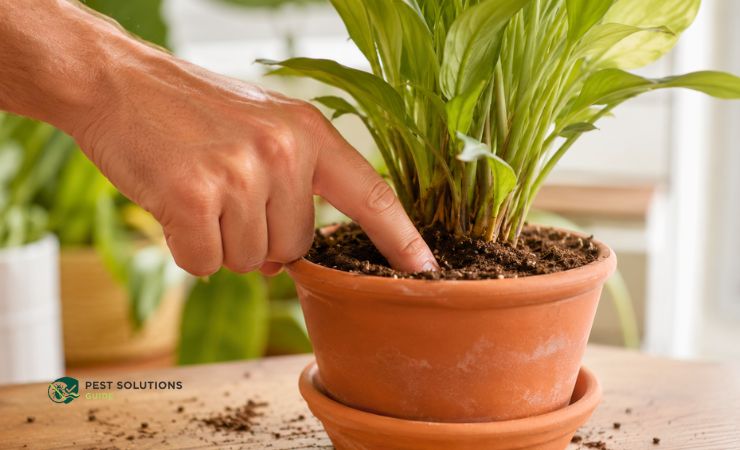
1. Let the Soil Dry Out: Water your plants less often. Fungus gnat larvae thrive in wet soil, so keeping it dry helps control them. Stick your finger about an inch into the soil. If it feels moist, wait a day or two before watering again. Let the top two inches of soil dry out completely to manage the problem effectively.
2. Set Up Your Apple Cider Vinegar Trap: Pour about a quarter inch of apple cider vinegar into a small bowl and add two drops of dish soap. Stir gently, cover the bowl with plastic wrap, and poke small holes in the top. Place the trap next to the plant most affected by the gnats. Check it daily and refresh the liquid every 3 to 4 days to keep the smell strong.
3. Insert Yellow Sticky Cards Into the Soil: Peel the backing off a yellow sticky card and stick it into the soil of each pot. Place the card near the surface where adult gnats are. The bright yellow color attracts them. Change the cards when they are full of insects or lose their stickiness.
4. Treat the Soil With a BTI Solution: This step targets the larvae you can’t see. BTI stands for Bacillus thuringiensis israelensis, a natural bacterium that kills fungus gnat larvae without harming your plants, pets, or people. Products like Summit Mosquito Bits contain BTI.
Soak the bits in water for a few hours to make a “tea,” then water your plants with that water. Do this once a week for three to four weeks to eliminate the larvae.
5. Monitor and Repeat: Check your traps daily to see if the number of gnats is going up or down. Most people notice a clear reduction in five to seven days when using several methods together. Keep treating for at least three weeks to disrupt every stage of the life cycle from egg to larva to adult. Don’t stop early just because you don’t see gnats flying around anymore.
What Actually Kills Fungus Gnats for Good
Drying Out the Soil: Larvae die quickly when the top two inches of soil dry out completely between waterings, significantly disrupting the breeding cycle.
BTI (Bacillus thuringiensis israelensis): This natural bacterium is in products like Mosquito Bits. It kills larvae in the soil without harming people or pets.
Hydrogen Peroxide Soil Drench: Mix one part 3% hydrogen peroxide with four parts water and use it to water your plants. It kills larvae on contact through oxidation. Do this once a week for two to three weeks. Some fizzing in the soil is normal.
Sticky Yellow Traps: Use these to catch adult gnats before they lay eggs. They don’t kill larvae, but they help stop the population from growing.
Apple Cider Vinegar Drowning Traps: These traps lure and drown adult gnats, quickly reducing the number of flying ones.
Heat: Fungus gnat larvae and eggs can’t survive in soil temperatures above 120 degrees Fahrenheit. Some gardeners sterilize potting mix in the oven before using it to prevent infestations.
Why Gnat Eggs Are Harder to Eliminate Than Adults
Fungus gnat eggs are very small and protected by soil particles. They also resist many surface treatments. In contrast, adult gnats are easy to catch and drown. However, to reach the eggs and larvae in the soil, you need to use specific treatments like BTI or hydrogen peroxide.
Best Products I Used to Get Rid of Fungus Gnats
LFSYS Yellow Sticky Traps (64 Pack)
Summit Mosquito Bits (30 oz)

Bonide Captain Jack’s Neem Oil Spray (32 oz)

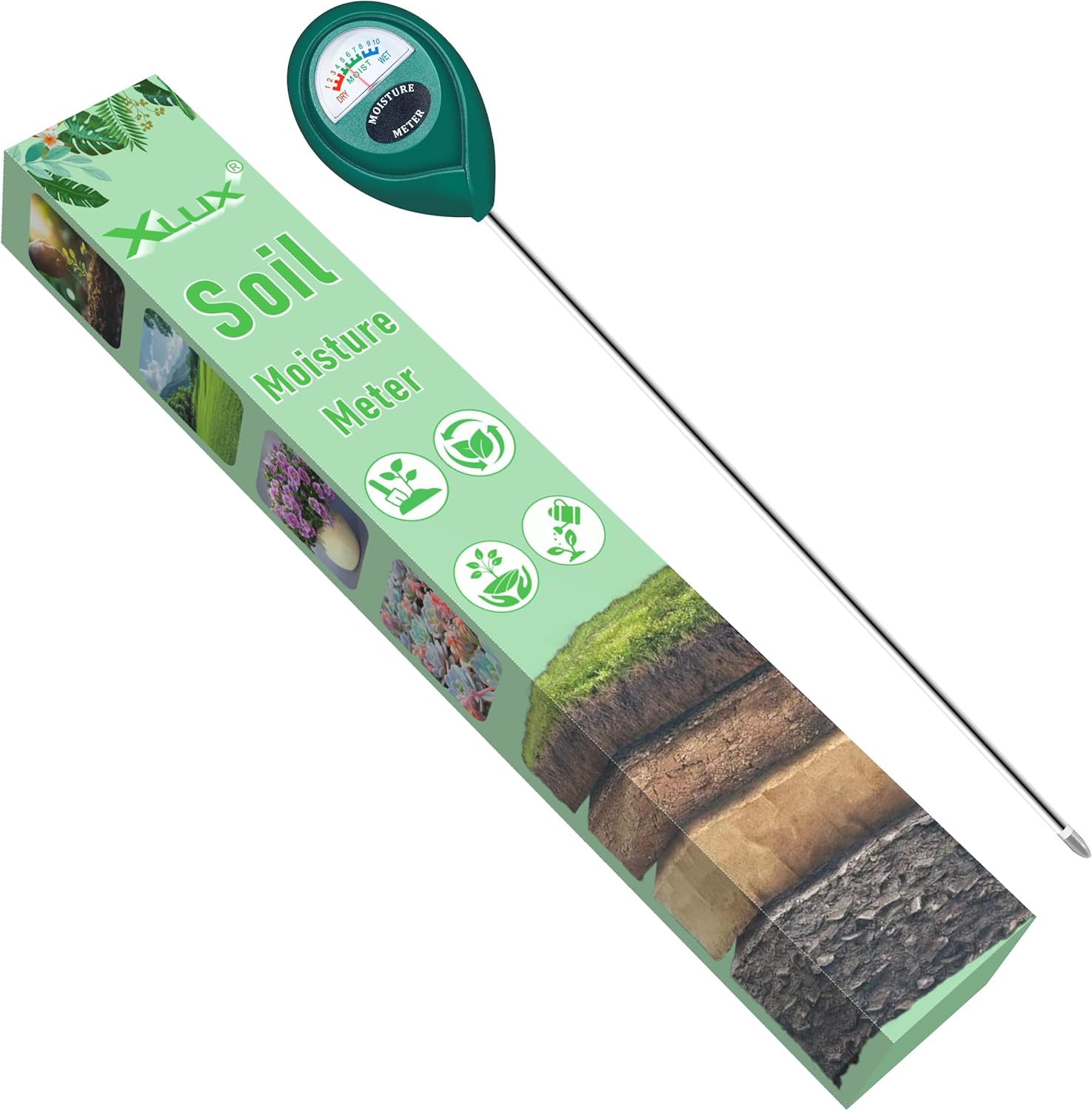
XLUX Long Probe Soil Moisture Meter
Frequently Asked Questions
1. Can a DIY fungus gnat trap get rid of gnats completely?
Yes, a DIY fungus gnat trap can help reduce and eventually eliminate a gnat problem. It’s most effective when you trap adults and treat the soil for larvae. Keep at it for at least three weeks to break the life cycle of the gnats. Many people notice fewer flying gnats in the first week. If the problem persists after a month of treatment, check the moisture level in the soil.
2. How do I know if I have fungus gnats or fruit flies?
Fungus gnats are slim, dark, and usually hover around the soil of your plants. Fruit flies are rounder, tan or yellowish, and are often found near food, drains, or garbage. If you see small flies flying up when you disturb the soil in your plant pots, they are likely fungus gnats. To be sure, let the soil dry out for a few days. Fungus gnats will become less active, while fruit flies will stay the same.
3. Does apple cider vinegar really work as a fungus gnat trap?
Yes, apple cider vinegar is effective for catching adult fungus gnats when set up correctly. The smell attracts the gnats, and dish soap prevents them from escaping once they land on the liquid. However, it won’t kill the larvae in the soil, so use this trap alongside a soil treatment like BTI or hydrogen peroxide. The vinegar trap controls the adult population, while the soil treatment addresses the larvae.
4. How long does it take to get rid of fungus gnats?
With consistent methods, most people see a big reduction in adult gnats within five to seven days. To completely control the infestation usually takes two to four weeks, as you need to address multiple generations of gnats. The larval stage is where most reproduction occurs, so apply BTI soil treatments weekly for best results. Stopping too soon is a common reason for gnats returning.
5. Are fungus gnats harmful to humans?
Fungus gnats do not bite humans and do not carry diseases that affect people. They can be annoying, but their main damage is to your plants, specifically the roots, which the larvae eat. A serious infestation can weaken or kill a plant over time, especially seedlings. If your plants are wilting or growing poorly despite watering, larvae might be damaging the roots.
6. Can I use hydrogen peroxide to kill fungus gnats?
Yes, a diluted hydrogen peroxide solution can kill fungus gnat larvae when watered into the soil. Mix one part 3% hydrogen peroxide with four parts water. It may fizz when it hits the soil, which is normal. Apply this solution once a week for two to three weeks instead of regular watering. It breaks down quickly into water and oxygen, leaving no harmful residue in the soil.
7. Why do I keep getting fungus gnats even after treating my plants?
If gnats return, it’s likely because the soil is too wet between waterings. Fungus gnats breed quickly, and even a small amount of damp soil allows them to thrive. I suggest getting a soil moisture meter to check the root zone’s moisture before watering. Also, look for standing water in pot saucers, as this can sustain an ongoing infestation.
A DIY Fungus Gnat Traps works well, especially if you combine the vinegar method, sticky cards, and a BTI soil drench. Most houseplant owners can clear up gnats within a few weeks using this three-part approach. You don’t need a professional for a standard infestation.
If you have tried everything for two months with no improvement, then getting professional help is a good next step.