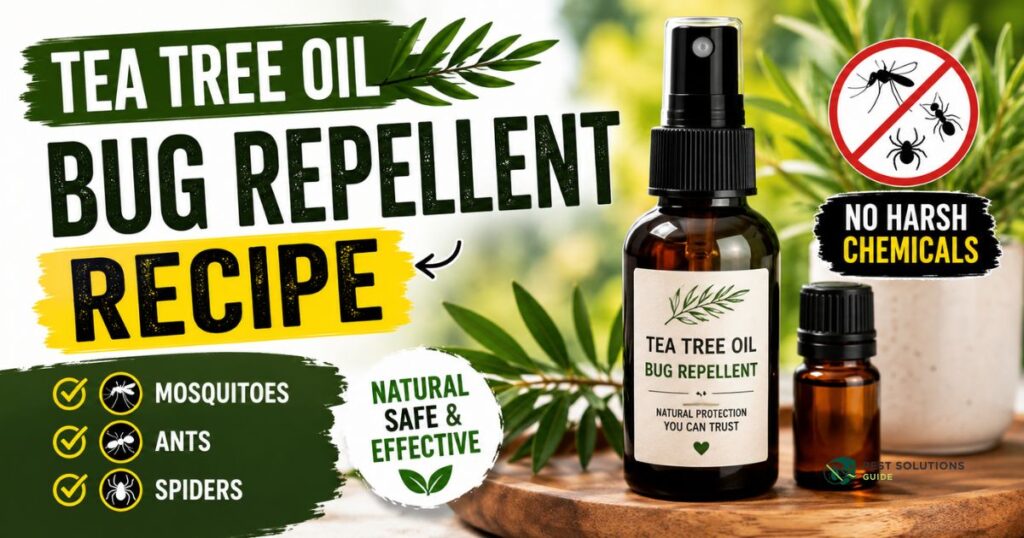
If you’re seeing bugs despite your efforts, you’re not alone. Many homeowners want a bug repellent that works without harsh chemicals. Store-bought sprays can be effective, but they often smell unpleasant and come with long warning labels. The good news is that the Tea Tree Oil Bug Repellent Recipe has proven bug-fighting properties.
When pests like mosquitoes, ants, and spiders go untreated, they can invade your porch, yard, and home, which can be frustrating, but you don’t have to spend a lot to handle them. I will show you how to make your own repellent, which bugs it helps with, and when to consider professional help.
- How Tea Tree Oil Keeps Bugs Away
- Supplies You Need Before You Start Mixing
- Instructions for the Tea Tree Oil Bug Repellent
- Which Bugs Does Tea Tree Oil Work On?
- Safety Guide for Kids, Pets, and Sensitive Skin
- What Actually Kills Bugs, Not Just Repels Them
- Pick These Up and You Are Ready to Go
- Your Top Questions Answered
- 1. Does Tea Tree Oil Repel Bugs?
- 2. How Long Does Homemade Tea Tree Bug Repellent Last on Skin?
- 3. Is This Recipe Safe to Spray on Skin?
- 4. Can I Use Tea Tree Oil to Keep Ants Out of My House?
- 5. What if My Pet Gets Into the Spray?
- 5. Will Tea Tree Oil Repellent Work on Ticks?
- 7. How Do I Store Leftover Repellent Spray?
How Tea Tree Oil Keeps Bugs Away
Tea tree oil is derived from the leaves of the Melaleuca alternifolia tree, native to Australia. It has a compound called terpinen-4-ol, which insects dislike. When I tried a diluted tea tree solution on my back porch, I noticed fewer mosquitoes within a day or two.
The strong scent makes it harder for insects to detect skin odours. Mosquitoes use the smell of carbon dioxide and skin chemicals to find people. Tea tree oil blocks these signals, making it hard for them to locate you and your home.
Additionally, tea tree oil has properties that affect insects when they come into contact with it. Studies show that tea tree oil works against mosquitoes, ants, spiders, lice, and dust mites.
While it won’t give complete protection, it works well for everyday outdoor use and indoor spot treatment. The key is to use the right concentration; if it’s too weak, it won’t work, and if it’s too strong, it may irritate your skin.
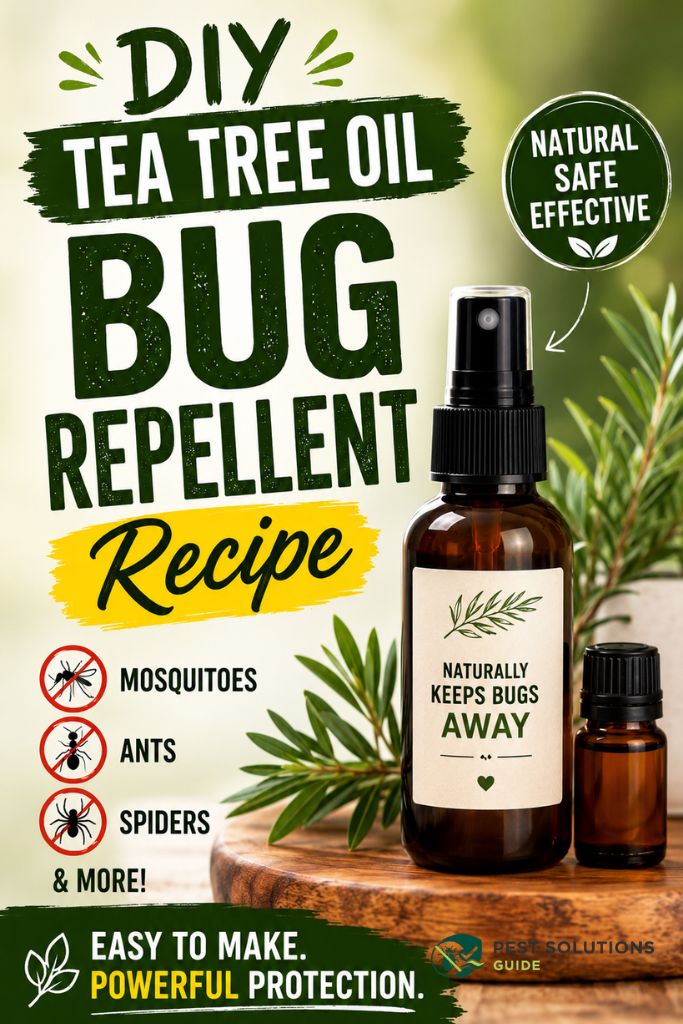
Supplies You Need Before You Start Mixing
To start, gather all your supplies so you can mix everything in under five minutes. You don’t need many items, just a few simple ones that you likely have at home. The main ingredient is tea tree oil. Make sure it is 100% pure tea tree essential oil, not a blend or diluted version. A small 1-ounce bottle will make several batches.
You will need a carrier liquid to dilute the oil for your skin safely. I recommend witch hazel because it absorbs quickly, feels non-greasy, and helps the oil mix evenly. You can also use plain water, but it won’t blend as well without shaking the bottle each time.
A small spray bottle, ideally 2 to 4 ounces, will work as your container. Dark glass bottles are best since they protect the oil from sunlight, but a clean plastic spray bottle is fine too if that’s what you have.
To enhance the mixture, add a few drops of lavender and peppermint essential oils. Both boost the repelling power and improve the scent.
Instructions for the Tea Tree Oil Bug Repellent
1. Choose Your Base Ratio: Start by pouring 2 ounces of witch hazel or water into your spray bottle; add the other ingredients on top. Witch hazel blends better and feels cleaner on the skin, so I suggest using it if you can find it at a drugstore.
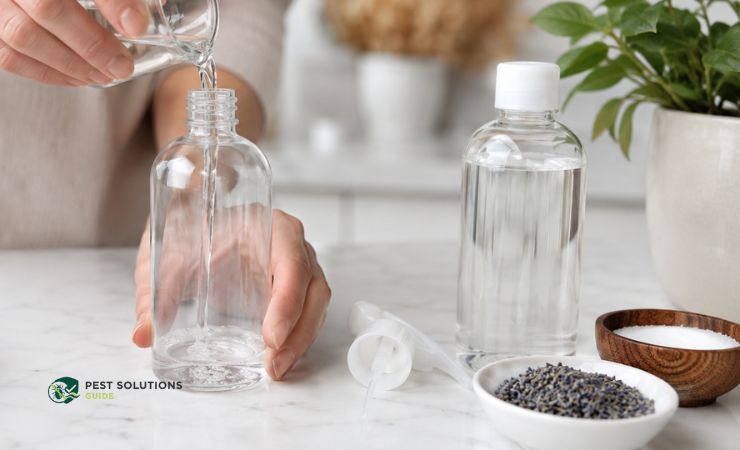
2. Add the Tea Tree Oil: Next, add 15-20 drops of pure tea tree oil directly into the bottle is the right amount for effectiveness and skin safety. Using more than 20 drops can irritate sensitive skin, especially around children.
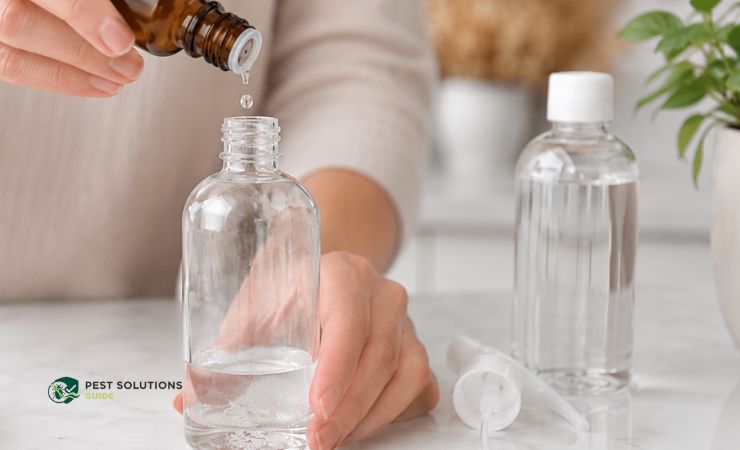
3. Boost With Optional Oils: If you have them, add 5 drops each of lavender oil and peppermint oil. Lavender helps keep mosquitoes away, while peppermint deters spiders and ants with its strong scent. This step is optional, but based on my experience, this mix works better than just tea tree oil.
4. Shake and Spray: Tightly cap the bottle and shake it for about 15 seconds before each use. Oil and water separate, so shaking is key to making the recipe work. Spray lightly onto exposed skin, clothing edges, door frames, windowsills, and outdoor seating areas.
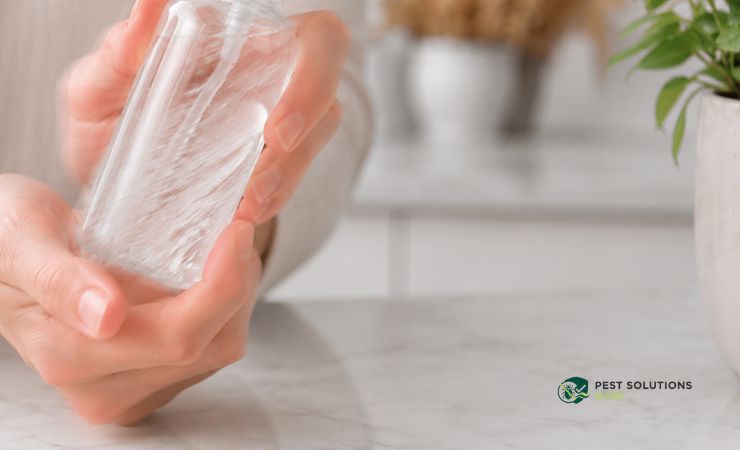
5. Reapply As Needed: Natural repellents don’t last as long as chemical ones. Plan to reapply every one to two hours outdoors or after heavy sweating. For indoor surfaces, one application in the morning usually lasts most of the day.
Which Bugs Does Tea Tree Oil Work On?
Mosquitoes: Tea tree oil strongly repels mosquitoes. A study found it effective when applied to the skin, especially when reapplied regularly.
Ants: Ants are very sensitive to tea tree oil. I’ve sprayed it along baseboards and entry points, and it disrupts their trails.
Spiders: tend to avoid areas with strong scents, such as tea tree oil. While it doesn’t kill them, spraying around window frames and doorways helps keep them away.
Lice and Dust Mites: Tea tree oil also affects lice and dust mites, making this recipe useful for more than just outdoor pests.
Safety Guide for Kids, Pets, and Sensitive Skin
Pets: Do not use tea tree oil directly on pets, especially cats and dogs. Cats can’t process it, and even small amounts can cause serious issues. Keep the spray away from areas where pets lick or rest.
Children: For kids over 2 years old, a properly diluted spray containing 10 drops or fewer per 2 ounces of liquid is usually safe for the skin. Avoid spraying near their face or hands. For toddlers under 2, skip the tea tree oil and use a pediatrician-recommended repellent.
Adults: Adults with sensitive skin should do a patch test before spraying widely. Apply a small amount to the inside of your wrist and wait 20 minutes to check for any irritation. This small step can help avoid discomfort later.
What Actually Kills Bugs, Not Just Repels Them
Heat: Temperatures above 120°F kill most soft-bodied insects and their eggs. Steam cleaning surfaces after spraying is a powerful one-two combination.
Rubbing alcohol (isopropyl alcohol): Kills insects on contact by dissolving their outer coating. It evaporates quickly, leaving no residue. Effective against ants and spiders.
Diatomaceous earth: A fine powder that shreds the exoskeleton of crawling insects. Sprinkle along baseboards and entry points. It works slowly but keeps working for weeks.
Dish soap and water: Kills soft-bodied insects like aphids and mosquito larvae by breaking down the surface tension of water and smothering them.
Peppermint oil at high concentration: Kills ants and spiders on contact when sprayed directly. Works faster than tea tree at killing, rather than just repelling.
Eggs are almost always harder to kill than adults because their outer shells are designed to resist the environment. Most repellents, including this recipe, do not penetrate egg casings. That is why follow-up treatments matter more than a single application.
Pick These Up and You Are Ready to Go
Majestic Pure Tea Tree Essential Oil (4 oz): This high-quality oil is perfect for your repellent recipe. It is 100% pure and steam-distilled, available in a 4-ounce bottle that provides enough oil for many batches of repellent spray. It mixes well with witch hazel and has a fresh, sharp scent that isn’t too strong.

Thayers Alcohol-Free Witch Hazel Toner (12 oz): It is a great carrier for tea tree oil. Since tea tree oil does not spread evenly on its own, this alcohol-free witch hazel is gentle on the skin and absorbs quickly, leaving no sticky residue, making it easy to reapply.

Amber Glass Spray Bottles (4-Pack, 2 oz): They are excellent for storing essential oils. Unlike plastic bottles, amber glass protects your repellent blend from light and helps keep it effective longer. The fine-mist nozzle delivers an even spray without soaking your skin or clothes.

Your Top Questions Answered
1. Does Tea Tree Oil Repel Bugs?
Yes, tea tree oil can help keep bugs away, like mosquitoes and ants. A study showed that tea tree oil can repel mosquitoes when applied to the skin. It’s not as strong as DEET, but it works well for everyday use if you apply it properly. Use 100% pure oil and reapply it regularly. Think of it as a mild repellent rather than a complete solution.
2. How Long Does Homemade Tea Tree Bug Repellent Last on Skin?
Natural bug repellents don’t last as long as synthetic ones. You can expect about one to two hours of protection outside. Heat and sweat can cause it to wear off faster, so reapply often on hot days or during yard work. For indoor use, one application usually lasts most of the day. Keep a small bottle handy for quick touch-ups. Shake the bottle before each use to mix the oil.
3. Is This Recipe Safe to Spray on Skin?
Yes, this recipe is safe for most adults. Use 15 to 20 drops of tea tree oil per 2 ounces of carrier oil. Avoid contact with your eyes, mucous membranes, and open cuts. Children over two can use a more diluted version, using about 10 drops per 2 ounces. Always do a patch test on the inside of your wrist first, especially if you have sensitive skin. Stop using it if you notice redness or itching.
4. Can I Use Tea Tree Oil to Keep Ants Out of My House?
Yes, tea tree oil works well to keep ants away, especially at entry points. Spray diluted tea tree oil along doorframes, windowsills, and baseboards where you see ants. The oil disrupts the scent trails ants use to find their way. You will need to reapply every few days, especially after cleaning. For large ant colonies, combine this spray with bait products for better results.
5. What if My Pet Gets Into the Spray?
Do not spray tea tree oil around pets, especially dogs and cats. Even small amounts can make them sick. Symptoms include drooling, weakness, vomiting, or tremors. If a pet comes into contact with the spray, rinse the area with plain water right away and call your vet. Keep sprayed surfaces away from pets until they are dry. Do not spray on bedding or food bowls.
5. Will Tea Tree Oil Repellent Work on Ticks?
Tea tree oil is not very effective against ticks. Ticks are harder to repel with essential oils, and the concentration needed to keep them away is too high for safe skin use. In areas with ticks, use a repellent that has DEET or permethrin instead. You can still use tea tree oil for mosquito and ant control, but don’t rely on it alone in tick-heavy areas. Use another repellent along with protective clothing for better results.
7. How Do I Store Leftover Repellent Spray?
Store your spray in a cool, dark place, like a bathroom cabinet or kitchen drawer. Heat and sunlight can break down the active ingredients in tea tree oil. If stored properly, a batch made with witch hazel stays effective for 4 to 6 weeks. If you use water as a base, use it within 2 weeks. Check the smell before each use; if it has faded a lot, it’s time to make a new batch.
Tea Tree Oil Bug Repellent Recipe
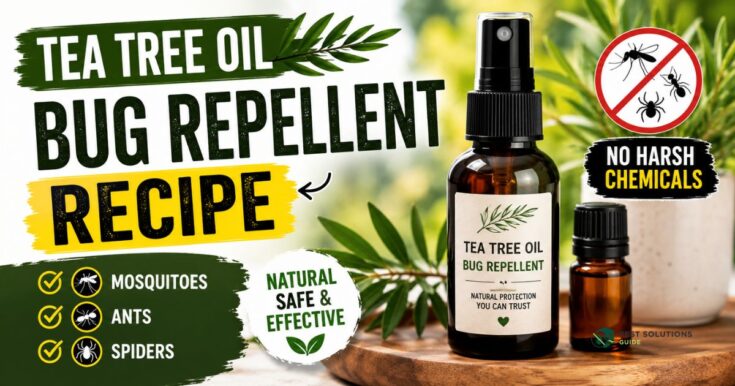
Tea tree oil bug repellent recipe you can mix in 5 minutes — repel mosquitoes, ants, and spiders naturally with just a few simple ingredients.
Ingredients
- 2 oz witch hazel (or plain water)
- 15–20 drops pure tea tree essential oil
- 5 drops lavender essential oil (optional)
- 5 drops peppermint essential oil (optional)
Instructions
- Start by pouring 2 ounces of witch hazel or water into your spray bottle; add the other ingredients on top. Witch hazel blends better and feels cleaner on the skin, so I suggest using it if you can find it at a drugstore.
- Next, add 15-20 drops of pure tea tree oil directly into the bottle is the right amount for effectiveness and skin safety. Using more than 20 drops can irritate sensitive skin, especially around children.
- If you have them, add 5 drops each of lavender oil and peppermint oil. Lavender helps keep mosquitoes away, while peppermint deters spiders and ants with its strong scent. This step is optional, but based on my experience, this mix works better than just tea tree oil.
- Tightly cap the bottle and shake it for about 15 seconds before each use. Oil and water separate, so shaking is key to making the recipe work. Spray lightly onto exposed skin, clothing edges, door frames, windowsills, and outdoor seating areas.
- Natural repellents don't last as long as chemical ones. Plan to reapply every one to two hours outdoors or after heavy sweating. For indoor surfaces, one application in the morning usually lasts most of the day.
A Tea Tree Oil Bug Repellent Recipe is one of the easiest, most affordable tools you can keep on hand for everyday pest control. For mosquitoes, ants, and spiders, DIY works well. Mix it up and stay consistent. For ticks, fleas, or a full-blown infestation, bring in a pro. You have got this. Drop a comment below or check out my post on natural ant control for more ideas.