Finding a bed bug on your sofa is stressful. The couch is where you relax, watch TV and sit with your family, and now it may be hiding a colony.
Here is the good news: you can treat a couch yourself if you catch the problem early and follow a proper process. A quick spray is not enough. Bed bugs hide deep in seams, zippers and under the frame, so you need to inspect, remove, heat-treat, protect and monitor.
In this guide, you will learn exactly how to check your couch, how to treat it step by step, how to stop bed bugs from coming back, and when it is time to call a professional.
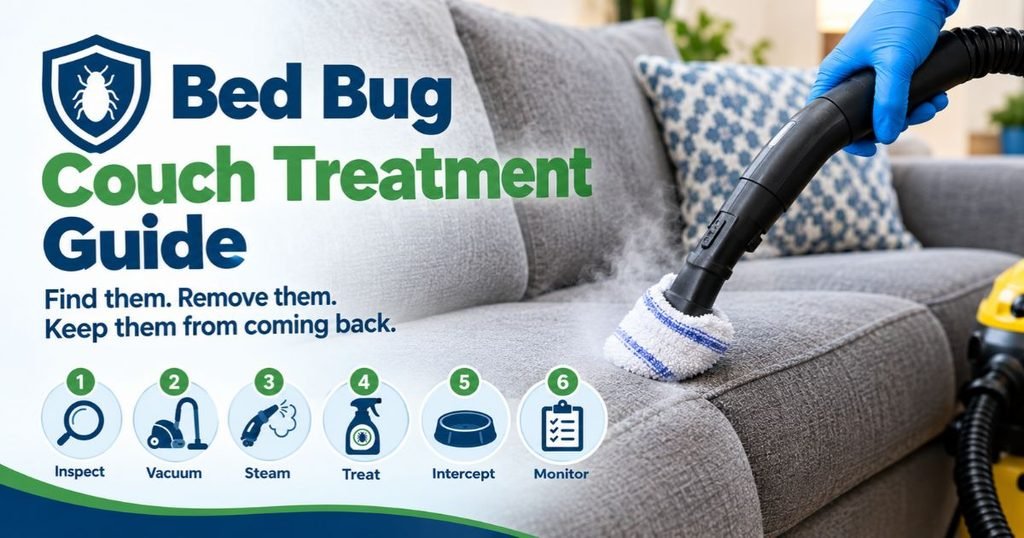
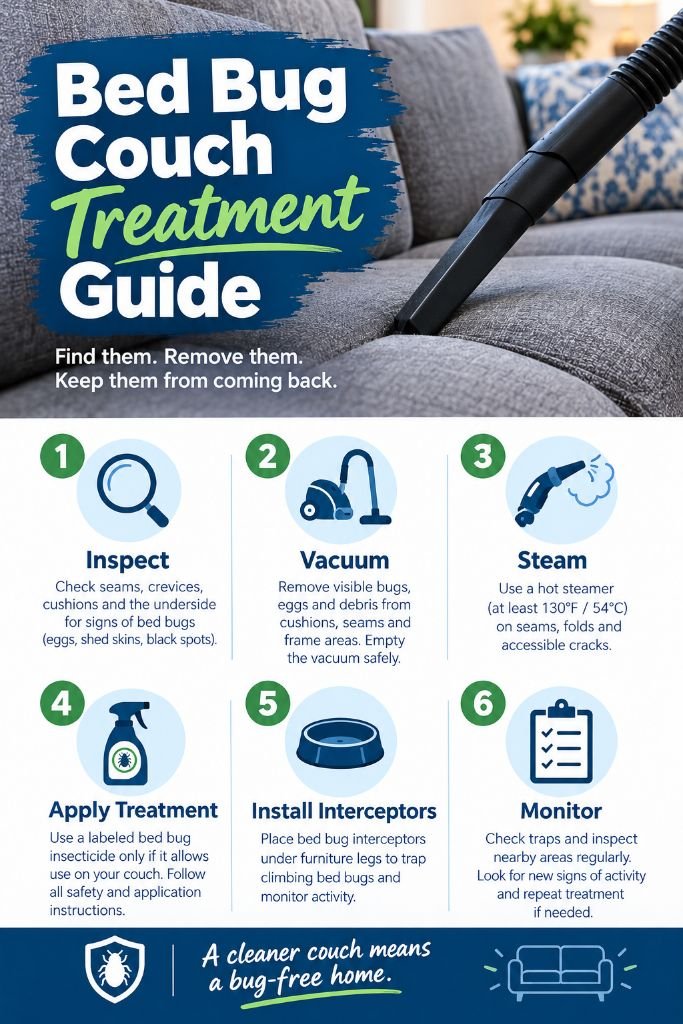
Quick answer: To get rid of bed bugs on a couch, inspect every seam, vacuum thoroughly, steam all cracks and crevices with a 180°F+ steamer, let the couch dry, treat with an EPA-registered bed bug product used exactly as labeled, then place interceptors under the legs and keep checking for several weeks.
Yes. Despite the name, bed bugs do not only live in beds. They hide in any soft, tight space close to where people rest, and a sofa is a perfect spot. Warmth and the carbon dioxide you breathe out draw them from hiding when you sit still on the couch.
Bed bugs get onto furniture in a few common ways: a used couch, luggage, backpacks, clothing, or a visitor’s belongings. Having them does not mean your home is dirty. They travel by hitchhiking, not by feeding on mess.
Signs of Bed Bugs on a Couch
Before you treat anything, confirm what you are dealing with. Look for these signs:
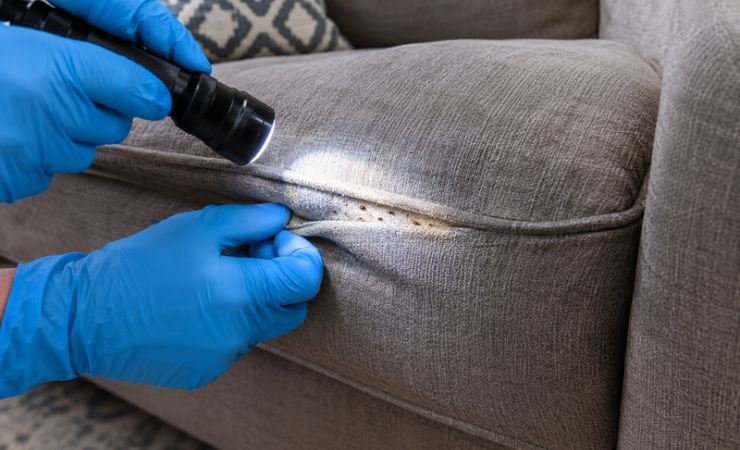
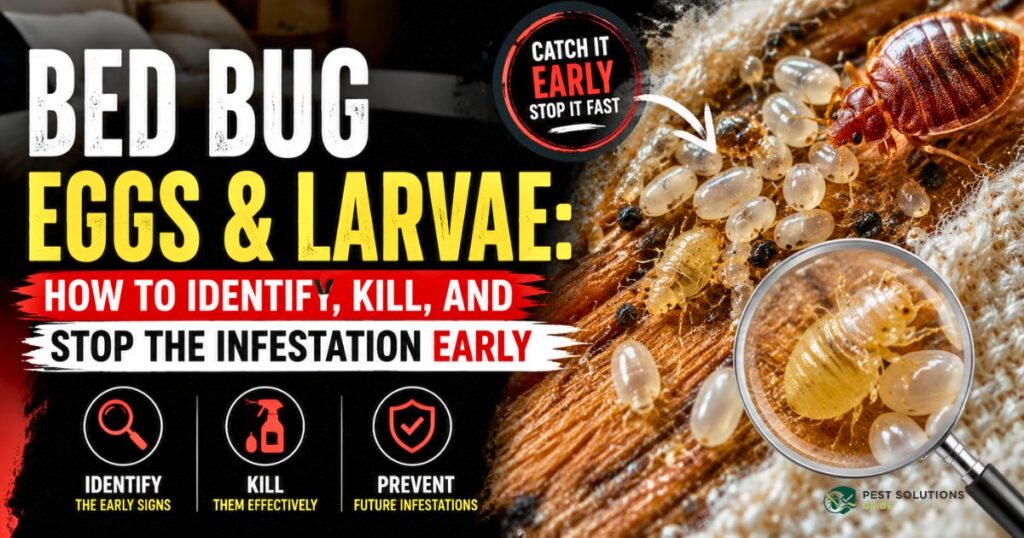
Black spots or thin black streaks. This is bed bug waste, and it often shows up on seams and fabric.
Shed skins. Young bed bugs molt through five growth stages as they grow, leaving pale, empty shells behind.
Small dried blood stains. These can mean a bug was crushed after feeding.
Eggs. They are milky white, tiny (roughly half the size of a rice grain) and usually tucked in cracks.
Live bugs. Adults are flat, oval and roughly the size of an apple seed. They look reddish-brown and swell up after a meal. Newly hatched ones are very small and hard to see.
Not sure what you found? Other small insects can look similar. If you cannot confirm it, take a clear photo or tape a sample to a card and show it to a pest professional or your local extension office.
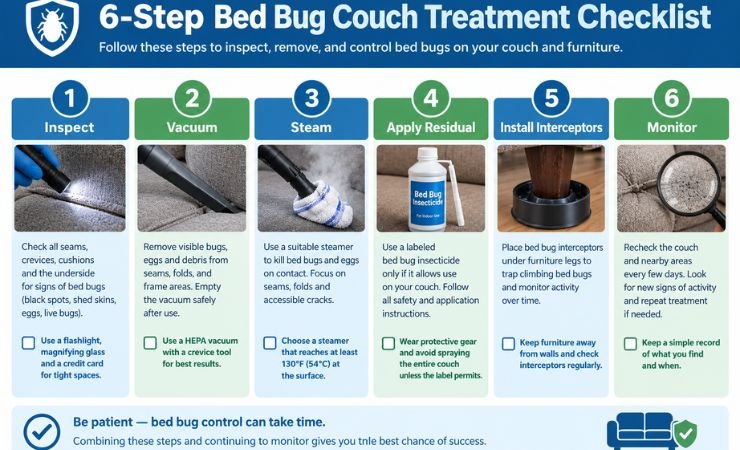
Bed bugs squeeze into tiny gaps, so do not skip anything.
Remove all cushions, pillows and throws. Check each one on all sides.
Unzip cushion covers if they are removable and check inside.
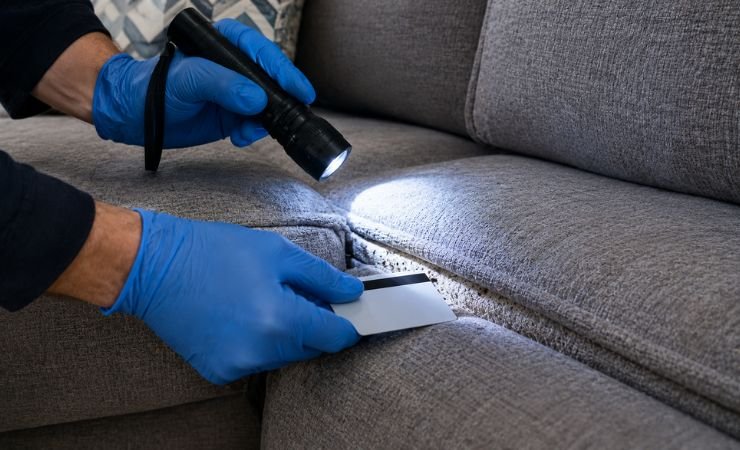
Run your credit card and flashlight along every seam, piping edge, button and zipper from end to end.
Check the armrests, back panels and frame joints.
Remove the thin dust cover on the underside of the couch. It is mostly decorative, and the space under it has plenty of cracks where bugs hide.
Check sleeper sofas and recliners, including the metal mechanism.
Work slowly with good light. A rushed inspection is the number one reason treatment fails.
Step 2: Clean Up and Isolate the Couch
Before treating, reduce what can spread:
Wash removable covers and throws in hot water, then dry on the highest heat setting for at least 30 minutes. The dryer heat is what kills bed bugs, including eggs.
Seal items in plastic bags when you carry them so bugs do not drop along the way.
Pull the couch away from walls. Do not move treated or infested items room to room.
Do not sleep on the couch or let kids or pets nap on it during treatment.
Step 3: Vacuum Thoroughly
Vacuuming quickly removes live bugs, shed skins, waste and some eggs, and it cuts the population before you steam.
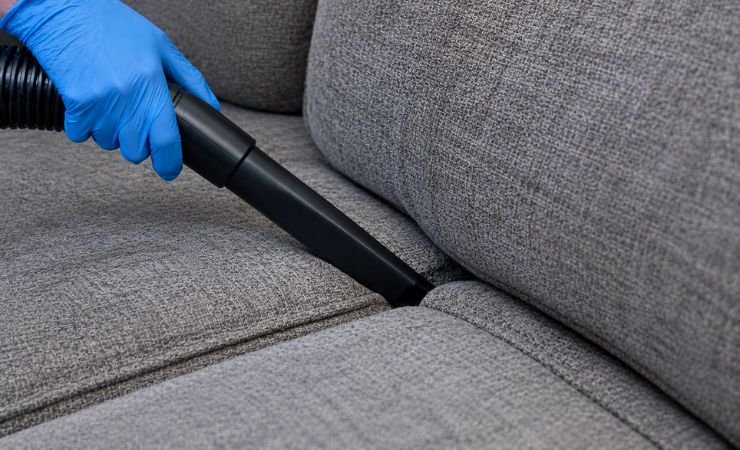
Use the crevice attachment along every seam, under cushions, around the frame and underneath.
Tip the couch onto its side or back if you can, and vacuum the underside.
A HEPA vacuum with a sealed, tight-fitting bag is best, because it helps keep bugs from escaping through the vacuum.
When done, seal the bag or canister contents in a plastic bag right away and put it in an outdoor trash bin. Wipe down the vacuum attachments.
Vacuuming alone will not eliminate an infestation, so move straight on to heat.
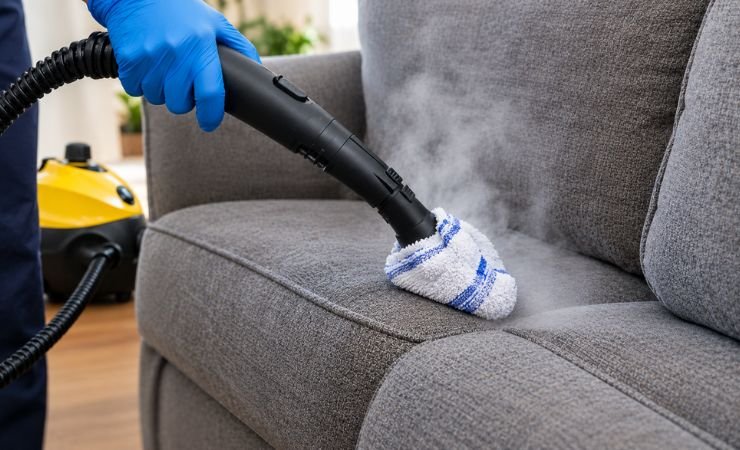
Steam is one of the best DIY tools because it kills bed bugs and eggs on contact, with no chemicals. Use a steamer that produces steam of at least 180°F.
How to steam a couch properly:
Fit the pinpoint (jet) nozzle.
For better heat at the tip, wrap a microfiber cloth around the nozzle head and secure it with rubber bands. This breaks up the force of the steam and helps keep the heat concentrated.
Move slowly along every seam, fold, zipper, button and edge. Work around armrests, under cushions and along the frame.
If your steamer has a pressure dial, use lower pressure on flat surfaces and higher pressure to push steam into cracks.
Do not soak the fabric. Keep moving so you do not leave it wet.
Safety note: Steam can damage some finishes and delicate fabrics such as microfiber, velvet and some leather. Test a hidden spot first and check the manufacturer’s care label.
Step 5: Let the Couch Dry, Then Apply a Residual Treatment (Optional)
Let the couch dry fully before applying any liquid product. This can take a few hours. Pointing a fan at it speeds things up.
A residual product is meant to keep working after application, which helps with bugs that missed the steam. If you choose to use one:
Pick a product that is EPA-registered for bed bugs and labeled for use on upholstered furniture.
Read the label first and follow it exactly. Rates, safety gear and pet and child rules differ between products.
Wear long sleeves and chemical-resistant gloves.
Spray seams, zippers, flaps, cracks and the frame, using the straw applicator if the product has one. Do not drench the fabric.
Keep children and pets away until the product is dry, as the label directs.
If you do not want to use chemicals, repeating the steam and vacuum cycle works too, but it needs consistency. Some people prefer to leave this step to a licensed pro.
What not to use: Bug bombs and foggers are not recommended. They tend to scatter bed bugs into other rooms without killing the ones hiding deep. Essential oil sprays, such as tea tree or peppermint, can repel some insects (see our tea tree oil bug repellent recipe for mosquito and outdoor uses), but they do not reliably wipe out an active bed bug infestation. The same goes for natural plant sprays like neem oil spray, which is best kept for garden pests.
Step 6: Install Interceptors and Monitor
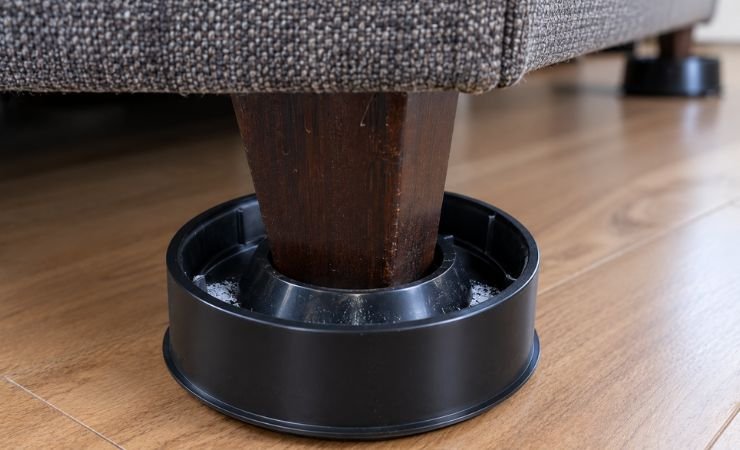
Interceptors are small cups that go under furniture legs. A bed bug trying to climb up to you falls into a pit with a powdery coating it cannot climb out of. They do two jobs: they block bugs from reaching you and they tell you whether you still have a problem.
Lift each leg and set it in the center of an interceptor.
Keep the couch from touching walls, curtains or anything that bugs could use as a bridge.
Check the cups every few days and again weekly. Empty cups for several weeks is a good sign. Bugs in the cups mean you need to repeat treatment.
For couches that sit on the floor with no legs, use a sealed furniture encasement or ask a pro about other monitoring options.
Some interceptors work with an add-on lure that releases a scent for a couple of months. It can make monitoring more effective, but it is optional.
Expect a few weeks, not a few days. Eggs hatch over time, so one treatment rarely clears everything. A good routine:
Week 1: Steam and vacuum every 2 to 3 days, then weekly.
Weeks 2 to 4: Check interceptors and seams every few days.
Weeks 4 to 8: Inspect weekly. If you find nothing, you are likely in the clear.
If you still find live bugs after two to three rounds, call a professional.
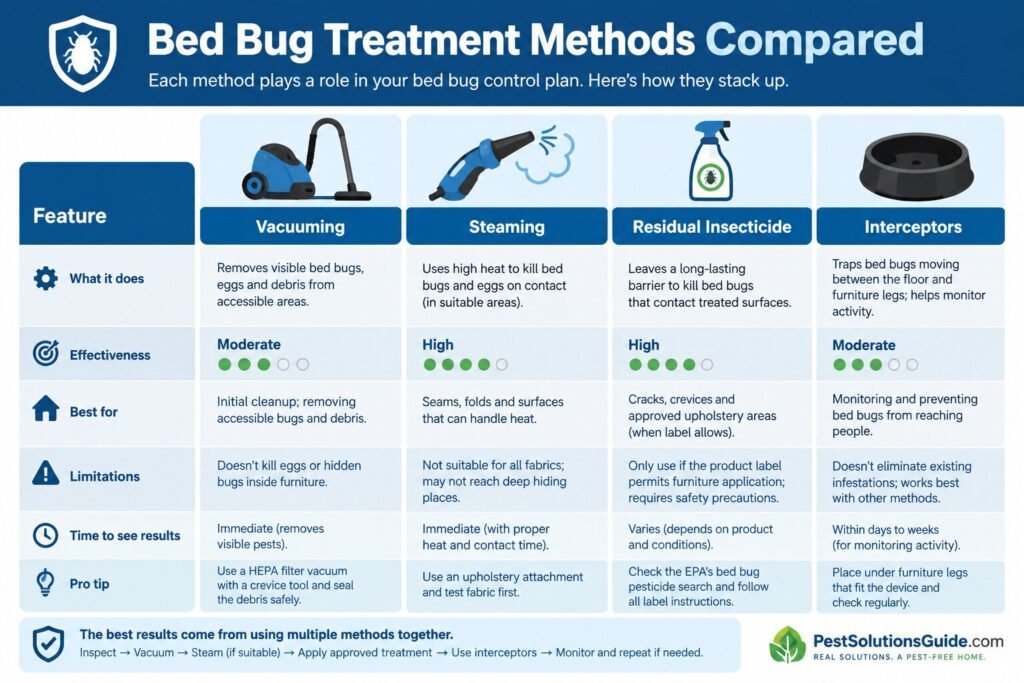
Quick Comparison: Which Method Does What?
Method
Kills Eggs?
Cost
Best For
Vacuuming
Partly
Low
First step, reducing numbers
Steam (180°F+)
Yes, on contact
Medium
Seams, cracks, upholstery
Hot dryer, 30 min
Yes
Free
Covers, pillows, throws
Residual spray
Varies by product
Medium
Backup protection
Interceptors
No
Low
Blocking and monitoring
Professional treatment
Yes
High
Heavy or repeat infestations
Should You Throw Away the Couch?
Usually, no. Most couches can be saved with careful treatment. Throwing it out can spread bed bugs through the hallway and stairs, and a replacement will not help if the bugs are also in your bedroom.
Consider discarding only if the furniture is badly damaged, heavily infested or too hard to treat. If you do, wrap it in plastic and label it “bed bugs” so no one picks it up.
When to Call a Professional
Call a licensed pest control company if:
You keep finding live bugs after multiple treatment rounds
Bed bugs are in more than one room
You live in an apartment or shared building (also tell your landlord right away)
You are not comfortable using pesticides
You have a medical condition or small children and want expert guidance
Professional heat treatments and targeted products can reach places DIY cannot.
How to Prevent Bed Bugs From Coming Back
Inspect used furniture carefully before bringing it home.
After travel, keep luggage off beds and couches and wash and dry clothes on high heat.
Keep clutter down so there are fewer hiding spots.
Vacuum upholstered furniture regularly.
Keep interceptors in place for a while after treatment ends.
Look for black streaks, shed skins, small blood spots, eggs and live bugs along seams, zippers and under the cushions and dust cover.
Can I get rid of bed bugs on my couch without a professional?
Often yes, if it is caught early. Use a full process: inspect, vacuum, steam, treat as labeled, and monitor. Heavy infestations usually need a professional.
Does steam kill bed bug eggs?
Yes. Steam at 180°F or higher kills bed bugs and eggs on contact when you move slowly and reach every crack.
Can bed bugs live in a leather couch?
Yes, mainly in seams, stitching and the frame. Leather is easier to wipe and vacuum, but test steam on a hidden spot first.
How long can bed bugs survive without feeding?
A long time, often several months. That is why monitoring for weeks after treatment is important.
Do essential oils kill bed bugs?
They can affect bugs on direct contact in labs, but they will not reliably reach hidden bugs or eggs, so do not rely on them for an active infestation.
Will a vacuum alone get rid of bed bugs?
No. It lowers numbers, but you also need heat and ongoing monitoring.
Final Thoughts
Bed bugs on a couch are a hassle, but they are beatable. Inspect carefully, vacuum, steam every crevice, treat safely, and keep interceptors in place while you monitor. Stay consistent for a few weeks and call a pro if the problem does not clear.
Have a question about your own situation? Contact us and we will point you in the right direction.
Disclosure: This post contains affiliate links. If you buy through them, we may earn a small commission at no extra cost to you. As an Amazon Associate, we earn from qualifying purchases.